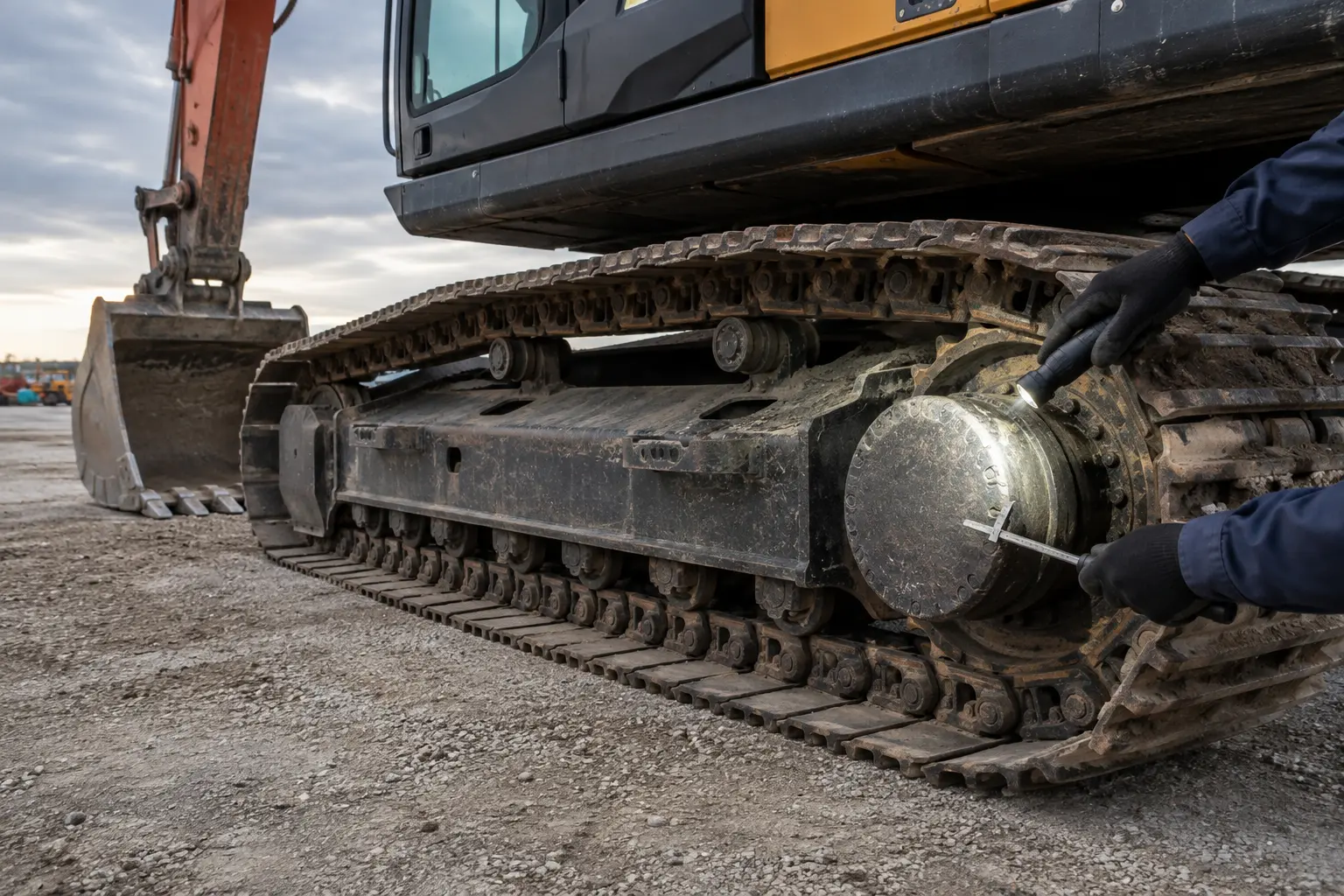
Establish identity and scope before travelling
Ask for the serial/PIN, full model name, displayed hours, location and configuration. Request service history and photographs of both the identification plate and the complete machine. Give the inspector a written scope covering relevant systems. State whether fluid sampling, diagnostic access, operating tests and wear measurements are included; these are separate activities that may require specialist equipment.
Separate static inspection from demonstration
A static walkaround can document leaks, damaged guards, tire or track condition, structural repairs and missing parts. Functional testing answers different questions. Arrange a competent operator, suitable space and agreed test conditions. Observe from a safe position. Do not open pressurized systems or enter crush zones to improve a photograph. If a test cannot be performed, record the limitation instead of marking the system satisfactory.
Make findings traceable
For each defect, keep a photograph, component location, inspector comment and any measurement with its unit. Distinguish observed symptoms from a diagnosed cause. A leak is an observation; the required repair should come from qualified assessment. Reconcile hours and service dates across records. Ask whether the machine was warmed, washed or serviced immediately before inspection because those conditions affect what can be observed.
Convert the report into a decision
Classify findings as immediate attention, planned repair, routine service or unresolved investigation. Obtain quotations for material items and include transport or workshop access. Decide which unknowns require resolution before purchase. An inspection describes condition under its stated conditions; it is not a guarantee against later failure. Keep the report and the seller's written responses together with the purchase documents.
Decision worksheet
| Decision | Evidence to collect | How it changes the shortlist |
|---|---|---|
| Machine identity | Plate photograph and serial-matched records | Confirm the machine being purchased |
| Functional condition | Test method, operator and limitations | Separate demonstrated function from an untested claim |
| Repair exposure | Dated quotations tied to report items | Adjust the usable-machine budget |
Before you decide
Questions to close out
- Agree inspection scope and access in writing.
- Keep original photographs and diagnostic reports.
- Record untested systems explicitly.
- Resolve material discrepancies before payment.
The strongest report makes its limits visible. A short list of unresolved questions is more useful than a blanket pass based on a walkaround.
Continue your research
Sources and further reading
Technical references supporting this guide. Machine manuals and documentation for the actual configuration remain essential when applying the guidance.