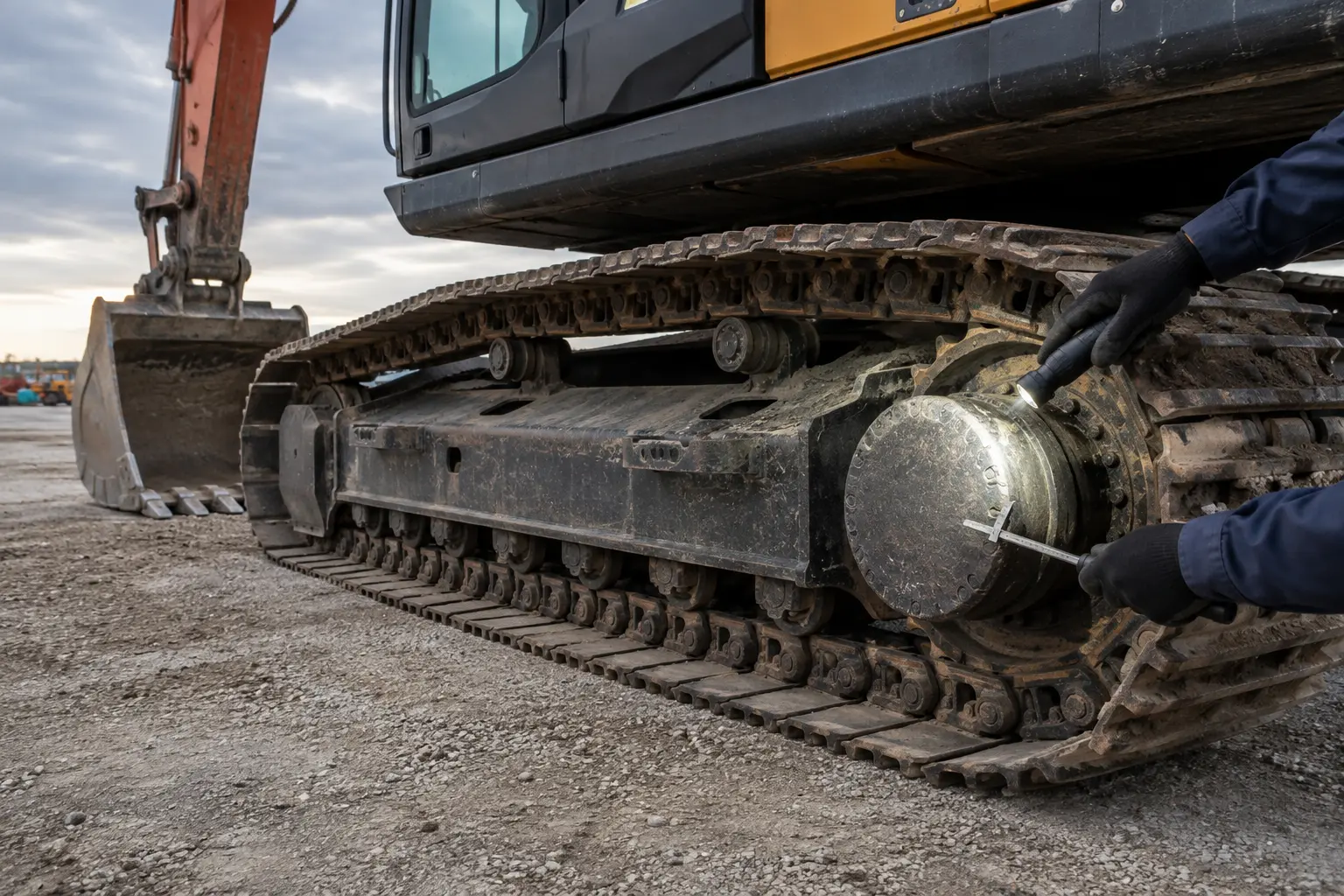
Build a dated component history
Arrange invoices and reports by date and machine hours. Record the component, work performed, parts replaced and follow-up operation. Separate routine service from diagnosis and repair. Ask about display or control-module replacement when hours do not reconcile. A list of service dates without the work scope is less useful than a smaller set of complete, attributable records.
Read fluid results in context
Caterpillar's fluid-analysis guidance describes testing for wear indicators, contamination and fluid condition. For a used purchase, ask which compartment was sampled, when the fluid was last changed and how the sample was identified. A single result is a piece of evidence, not a whole-machine pass. Have the laboratory or qualified technician interpret the findings and any recommended follow-up.
Reconcile reports with the inspection
Give the inspector relevant service and analysis records before the visit. Ask whether current observations are consistent with the documented repair history and whether a test should be repeated. Recently changed fluids or limited operating access may reduce what one sample can reveal. Keep those limitations in the report rather than converting an absence of reported concern into proof of condition.
Retain evidence that can travel with the machine
Keep original reports and invoices, with personal information handled appropriately, rather than only a seller's summary. Record outstanding questions and written responses. After purchase, use the same component identity and maintenance record structure for continuity. The goal is a usable history that helps the next service decision, not a folder of documents that cannot be matched to the machine.
Build a traceable hydraulic-oil evidence record
For a used excavator hydraulic sample, retain the machine serial/PIN, sampled compartment, sample date, machine and fluid hours, fluid identity, laboratory reference and full interpretation. Add the known fluid-change or top-up history and any relevant repair invoice; mark missing history as unknown. Do not substitute an engine-oil report for a hydraulic-compartment result.
Caterpillar’s guidance includes hydraulic oil in its lubricated-system analysis and describes checking wear indicators, contaminants and oil condition. Those are different questions from whether an attachment function was demonstrated. Keep the hydraulic sample, inspection observations and functional-test conditions together.
Read the trend and close the recommended action
Caterpillar’s results guide explains that oil trends depend on repeated samples from the same compartment and correctly recorded oil and equipment hours. The interpretation may request another sample or investigation. Compare the laboratory’s own conclusion and recommended action across dated reports; do not apply a generic metal concentration or cleanliness pass mark to every machine.
Create a follow-up entry with the report reference, action requested, responsible technician, completion evidence and next review date. A recent clean result does not erase an earlier recommendation unless the laboratory or technician explains how it was resolved. Request the interpretation rather than relying on a seller’s cropped colour indicator.
Decision worksheet
| Decision | Evidence to collect | How it changes the shortlist |
|---|---|---|
| Identity | Serial/PIN and component reference | Connects records to the actual equipment |
| Sampling | Date, compartment and fluid-change history | Supports interpretation of the result |
| Repair | Scope, replaced parts and follow-up | Shows what was actually addressed |
| Hydraulic sample identity | Compartment, machine/fluid hours, fluid identity and lab reference | Prevents a report from another compartment or interval being treated as equivalent |
| Laboratory follow-up | Original recommendation, response and completion evidence | Shows whether a concern was investigated rather than merely superseded by another sample |
Before you decide
Questions to close out
- Reconcile dates and hours.
- Keep complete reports, not only summaries.
- Ask who interpreted each result.
- Record unresolved follow-up recommendations.
Use history and current inspection together. Neither an attractive service folder nor one clean sample should erase contradictory physical evidence.
Continue your research
Sources and further reading
Technical references supporting this guide. Machine manuals and documentation for the actual configuration remain essential when applying the guidance.