Request an identity sequence
Ask for the complete machine, identification plate, meter display and visible configuration in a coherent set. Include the location and date of capture. Request original files where practical so small markings remain readable. Reconcile the plate and configuration with the listing and service documents. A collection of attractive images is not sufficient if they cannot be confidently associated with the same machine.
Divide the evidence by system
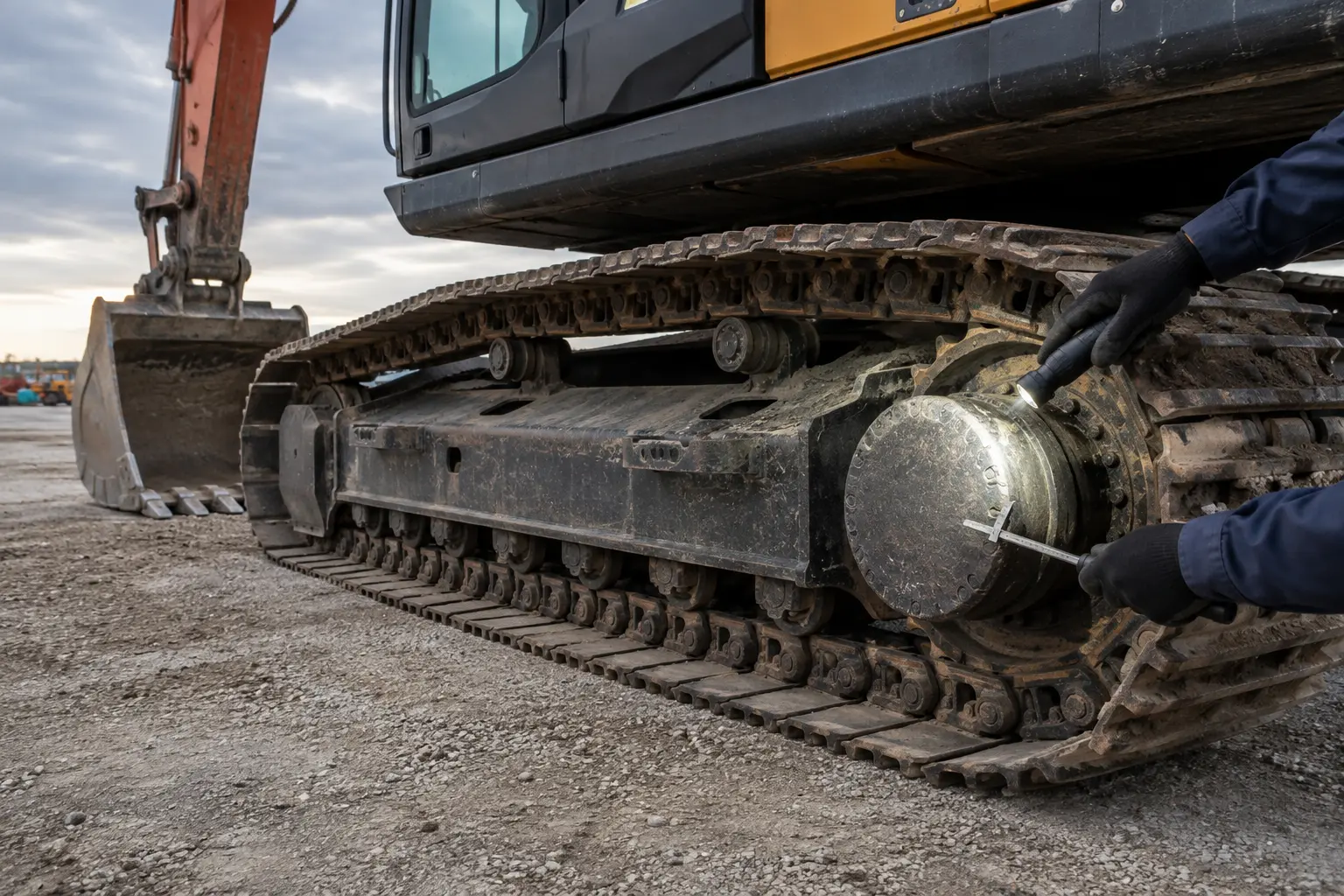
Prepare a shot list for running gear, structure, linkage, hydraulics, controls and included attachments. Ask for component locations in the report so close-ups can be understood. Keep observations separate from diagnoses: photographs may show damage or leakage, while the repair decision needs qualified assessment. Request a written list of areas that could not be accessed.
Define demonstrations and their limits
Arrange a competent operator and suitable site conditions for functional evidence. Ask what was cold, warmed, loaded or tested only without load. Use an independent inspector when the consequence of an unknown justifies it. Do not ask a seller to enter crush zones, defeat interlocks or expose pressurized systems to obtain footage. A live video call can clarify identity and questions but does not replace specialized testing.
Close the loop before committing
Turn remaining questions into requests for measurements, diagnostic work, records or quotations. Record the answers and any conditions of the purchase in writing. Separately verify payment instructions and the party releasing the machine through trusted channels. Confirm the carrier receives the same configuration and loading information as the inspector. Unresolved evidence should affect the decision rather than disappear between conversations.
Use a sequenced inspection video checklist
Send the shot list before the visit and ask the inspector to identify each segment. Start with the date, location, complete machine and identification plate; connect close-ups to a wider view so their location is clear. Continue through the running gear, structure, attachment interfaces, cab and visible service areas. Finish with the agreed demonstrations and an explicit list of what was not tested.
Keep the original files and a simple index linking each finding to a photograph or video timestamp. If footage is edited, ask what was omitted and request the relevant original segment. A coherent recording improves traceability; it does not authenticate ownership or prove that an unseen system is sound.
Set a stop point for buying sight unseen
Before reviewing footage, write down which unknowns require an independent visit, records, measurements or a repair quote. Examples include unreadable identification, inconsistent component history, inaccessible structural areas or unavailable operating tests. Assign a person and evidence request to each unresolved item. Do not convert a seller’s inability to demonstrate a function into a pass.
Agree the site’s safe observation and communication arrangements with the competent operator. CCOHS stresses visibility to the operator and staying clear of equipment movement and swing areas. No requested camera angle should override those arrangements. Keep the remote inspection decision separate from confirmation of the seller, payment instructions and equipment release.
Decision worksheet
| Decision | Evidence to collect | How it changes the shortlist |
|---|---|---|
| Identity | Plate, whole-machine views and dated records | Connects evidence to the actual item |
| Condition | System-specific images and independent report | Makes the review repeatable |
| Test limits | Operating conditions and inaccessible areas | Shows what remains unknown |
| Identity segment | Dated whole-machine view followed by readable plate and hour display | Connects the record to the described machine |
| Component segment | Wide location view, relevant close-up and matching finding reference | Makes defects traceable without treating the image as a diagnosis |
| Demonstration segment | Function, operator, conditions and explicit exclusions | Shows what was demonstrated and what still needs an onsite assessment |
Before you decide
Questions to close out
- Send a written evidence and shot list.
- Retain original files.
- Ask for explicit test limitations.
- Resolve identity and payment discrepancies separately.
Remote evidence is strongest when it can be traced and questioned. A shorter, well-organized inspection pack is more useful than hours of unstructured footage.
Continue your research
Sources and further reading
Technical references supporting this guide. Machine manuals and documentation for the actual configuration remain essential when applying the guidance.