Read the terms for the actual sale
Save the current auction and location-specific terms. Identify the buyer-fee calculation, currency, payment requirements, removal conditions and any limitations on inspection or representations. Do not assume terms from a previous event still apply. Ritchie Bros. publishes buyer information, but the applicable sale documents control that transaction; this guide does not prescribe one universal fee or deadline.
Decide which unknowns you can accept
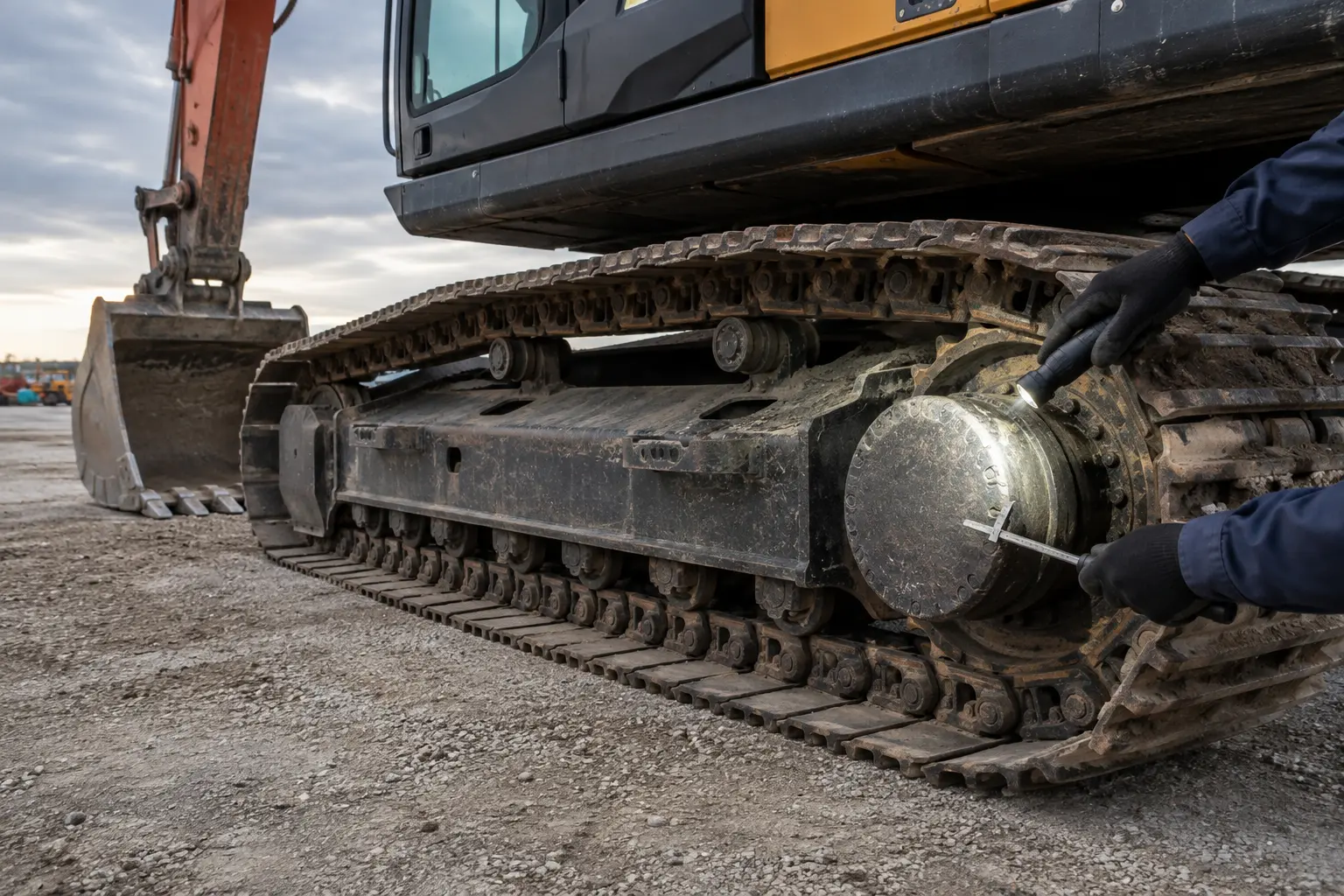
Obtain the lot identity and supporting photographs, then commission an inspection where practical. Ask which functions can be tested at the yard and whether an operator or appointment is required. If the machine cannot be demonstrated, price that uncertainty consciously. A photograph of a running engine does not establish the condition of every hydraulic function, drive system or attachment.
Work back from the all-in ceiling
List the maximum total spend, estimated fees, applicable tax treatment, transport, loading, immediate service and repair reserve. The remaining amount is the starting point for a bid ceiling, adjusted for how the actual fees are calculated. Do not subtract a percentage as though it were a fixed charge. Use the HeavyEQ auction calculator with the sale's current terms and retain a written breakdown.
Plan collection before the auction ends
Give the carrier the pickup location, collection window, loading support, operating status, actual dimensions and what travels separately. Confirm who supplies lifting or recovery equipment if the machine will not load itself. Ask about release documents and appointment arrangements. A successful purchase can still become an expensive job if collection requires unplanned disassembly, a second truck or workshop intervention.
Decision worksheet
| Decision | Evidence to collect | How it changes the shortlist |
|---|---|---|
| Sale terms | Current event and location documents | Defines the actual transaction obligations |
| Inspection limits | Functions tested and inaccessible systems | Makes uncertainty part of the decision |
| Collection | Carrier quote and loading arrangements | Prevents an incomplete removal budget |
Before you decide
Questions to close out
- Save the applicable sale terms.
- Verify exact lot and machine identity.
- Obtain transport and loading costs.
- Write down the bid ceiling before bidding begins.
Auction discipline starts with a complete cost boundary. If a material question remains unanswered, change the bid or the decision rather than quietly assuming the best outcome.
Continue your research
Sources and further reading
Technical references supporting this guide. Machine manuals and documentation for the actual configuration remain essential when applying the guidance.