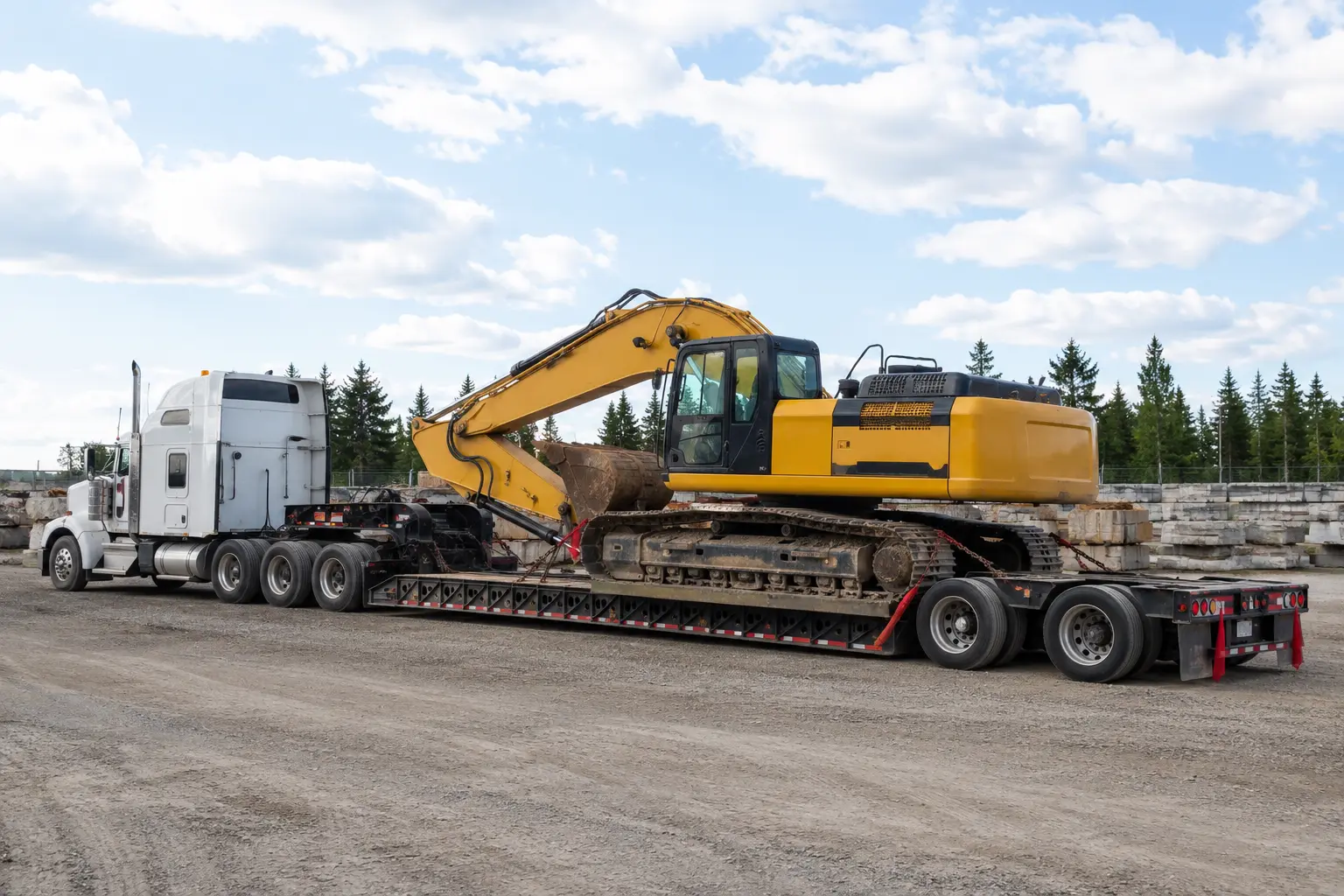
Describe the complete travel configuration
Record overall length, width, height and weight with the intended attachment, blade, boom, counterweight and tires or tracks. State what is folded, lowered, removed or carried separately. Distinguish a machine measurement from the overall height or weight of the loaded vehicle combination. Do not add nominal machine height to a guessed deck height and treat the result as route clearance.
Explain what happens at pickup
Tell the carrier whether the machine starts, steers, brakes and moves under its own power. Identify ramps, loading docks, lifting assistance, ground surface and access restrictions. Include the contact responsible for releasing the machine and confirming appointments. If disassembly is required, identify the competent party performing it and how loose parts will be packaged, identified and loaded.
Have the route and vehicle assessed
Permit, axle, clearance and travel requirements depend on the actual vehicle/load combination and route. Ontario's published guidance describes its oversize/overweight permit process; other jurisdictions have their own requirements. Ask the carrier to confirm the rules that apply to the planned movement. Do not turn a model's brochure width into a blanket statement that a shipment is legal without a permit.
Make the quote scope explicit
Ask whether the quote includes permits where applicable, loading support, escorts when required, waiting time, additional stops and equipment carried separately. Clarify what changes the price if the measured configuration differs from the request. Keep the inspection photographs and measurement record with the booking so the dispatcher and driver are working from the same information.
What trailer do I need for an excavator?
Ask the carrier to assess the measured excavator against a specific trailer configuration. Compare usable deck length and width, loaded deck height, load concentration, loading approach and ground clearance. A trailer class name or headline capacity does not answer all of these questions. Trail King publishes separate deck and capacity specifications for its detachable lowboy models; its step-deck specifications also distinguish distributed capacity from concentrated-load rating.
For an excavator, supply the travel position of the boom and stick, bucket or coupler state, track width, counterweight configuration and any parts transported separately. Have the carrier identify the proposed support position and loading method using the machine and trailer instructions. The selection is unresolved until the actual configuration and route have been assessed.
Step deck, lowbed and RGN: compare the actual trailer
A step deck has upper and lower deck levels. Check the usable space on the lower deck, the loaded height and the available loading equipment. Trail King lists different loaded deck heights within its step-deck family, so one generic deck-height assumption is inadequate.
Lowbed or lowboy describes the low load-carrying deck; RGN refers to a removable gooseneck arrangement. A detachable lowboy can provide front loading after the neck is disconnected. Confirm the actual trailer design rather than treating these labels as interchangeable ratings. Ask about deck space, concentrated capacity and the room required to load at both sites. A lower deck alone does not establish route clearance or legal movement.
Loading requirements for non-running equipment
Report starting, steering, braking and rolling condition separately. Include locked tracks or wheels, leaks, damaged access points and whether the attachment can be put into its documented travel position. Send photographs before a truck is assigned.
Some trailers provide recovery equipment: Trail King describes a winch on its hydraulic sliding-tail model. That is an equipment example, not confirmation that a particular disabled machine can be recovered. Have a competent carrier agree the recovery method, rated equipment, machine-approved connection points, site access and people responsible before dispatch. Do not improvise towing or lifting from a generic transport guide.
Equipment hauling insurance questions
Request written confirmation for the named machine, stated value, route and transport dates. Ask the carrier and insurance broker which coverage addresses damage to the machine in transit and during loading or unloading, and whether temporary storage, subcontractors or separate attachments change the coverage. Ask about limits, deductibles, exclusions and the reporting process if damage is found.
Cargo, vehicle and general liability are distinct insurance categories in insurer guidance. A statement that a carrier is insured does not answer which terms apply to your shipment. Northbridge directs readers to the policy for conditions and exclusions. Obtain the applicable confirmation and keep dated condition photographs and the pickup/delivery record; this checklist does not determine coverage.
Decision worksheet
| Decision | Evidence to collect | How it changes the shortlist |
|---|---|---|
| Machine envelope | Measured travel configuration and attachments | Supports vehicle and loading selection |
| Pickup readiness | Operating status and loading assistance | Reveals recovery or lifting requirements |
| Route | Carrier assessment of the actual combination | Identifies applicable permits and clearance work |
| Trailer rating basis | Actual trailer model, deck dimensions and concentrated-load rating | Prevents a headline distributed capacity from being treated as the complete equipment assessment |
| Disabled machine | Separate start, steer, brake and roll status; agreed recovery responsibilities | Determines what loading assistance must be arranged before dispatch |
| Insurance scope | Written answers for transit, handling, value, exclusions and claim reporting | Makes unresolved coverage questions visible before booking |
Before you decide
Questions to close out
- Photograph the complete travel setup.
- List loose parts and separate attachments.
- Confirm both site contacts and access.
- Request written inclusions and change conditions.
- Has the carrier reviewed the actual trailer and excavator travel configuration together?
- Are non-running conditions and recovery responsibilities agreed in writing?
- Have the insurer or broker answered the shipment-specific coverage questions?
The best quote request removes ambiguity. One clear configuration sheet is more useful than sending several brochures with conflicting transport and operating positions.
Continue your research
Sources and further reading
Technical references supporting this guide. Machine manuals and documentation for the actual configuration remain essential when applying the guidance.
- Ontario — Oversize/overweight permit guidance (opens in a new tab)
- Trail King — TKHDG detachable lowboy specifications (opens in a new tab)
- Trail King — step-deck geometry and rating basis (opens in a new tab)
- Trail King — hydraulic sliding-tail loading equipment (opens in a new tab)
- Northbridge — transportation coverage categories and policy conditions (opens in a new tab)
- Intact — transportation insurance coverage categories (opens in a new tab)