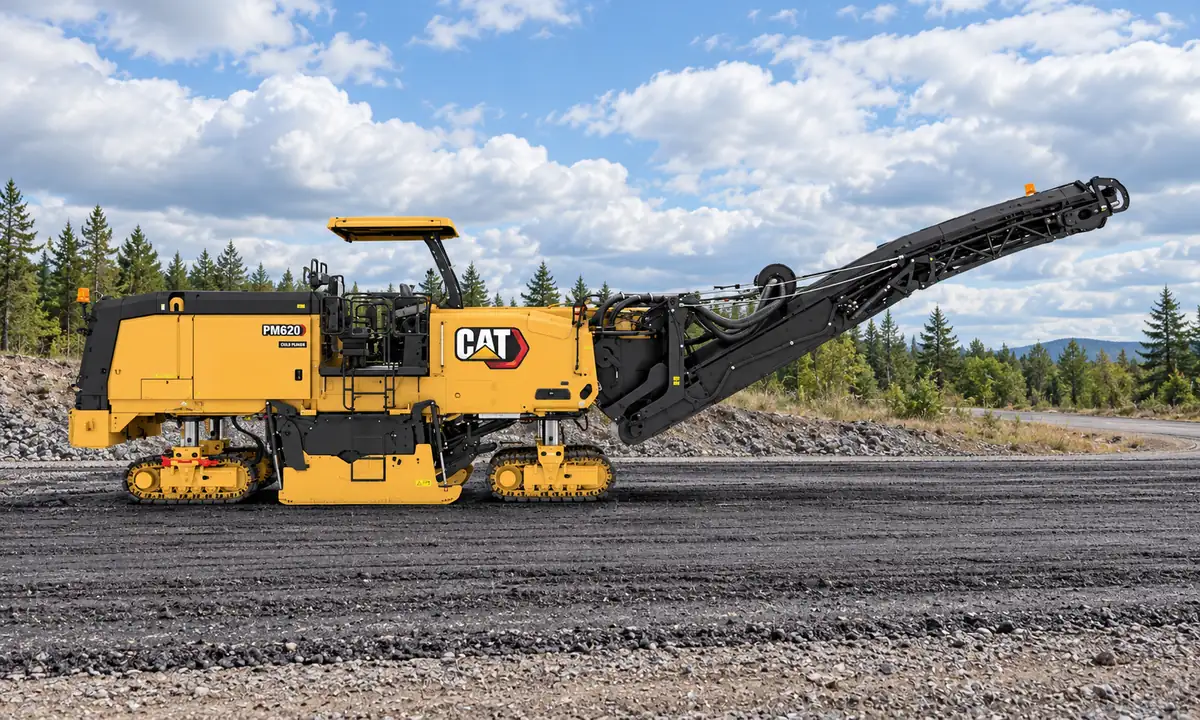
Identify drum width and application
Record the milling drum, tool arrangement and intended surface work. Wirtgen describes different milling drums and tool spacings for different applications. For a used purchase, obtain the actual drum identity and supporting information rather than assuming the factory headline width describes the installed package. Keep maximum depth separate from expected production or finished-surface requirements.
Inspect the cutting and material systems
Have a specialist inspect picks or cutting tools, holders, drum condition, drive components, conveyor belts and transfer points. Ask for a clear distinction between routine consumables and structural or drive repairs. Review water-system and dust-control equipment appropriate to the model. A clean exterior does not reveal the condition of the working parts behind guards.
Verify controls and demonstration scope
Inventory grade and slope sensors, displays, cables and any included automation hardware. Ask which functions were demonstrated and under what conditions. A static inspection cannot establish performance in a particular pavement or depth of cut. Retain that limitation and obtain the specialist advice needed for the planned contract before treating brochure limits as an operating forecast.
Reconcile working and transport positions
Describe conveyor folded or raised, canopy position, track arrangement and the fitted milling package. Keep working clearance separate from travel dimensions. Price tool replacement, conveyor work, commissioning, transport and support together. Ask whether spare tools, holders or loading accessories shown with the machine are included in the sale.
Decision worksheet
| Decision | Evidence to collect | How it changes the shortlist |
|---|---|---|
| Cutting package | Actual drum, tool spacing and application | Matches the machine to the surface task |
| Material removal | Belt, transfer and conveyor inspection | Identifies wear and readiness work |
| Transport | Folded conveyor and canopy basis | Prevents using the working envelope for shipping |
Before you decide
Questions to close out
- Identify the installed drum.
- Obtain a specialist wear report.
- Inventory sensors, controls and spares.
- Confirm one documented travel configuration.
Compare the complete milling package and the cost of commissioning it for your work. Width and maximum depth are screening values, not a promised production rate.
Continue your research
Sources and further reading
Technical references supporting this guide. Machine manuals and documentation for the actual configuration remain essential when applying the guidance.