Identify the load, attachment and receiving point before choosing the undercarriage and front arrangement. Mobile, crawler and stationary handlers have different setup requirements. Keep cab elevation, stabilizers and the tool attached to the applicable working envelope.
Questions that shape the equipment choice
Job requirement
What to compare
Evidence to obtain
Material handling
Tool and front arrangement
Obtain the configuration-specific load information
Site layout
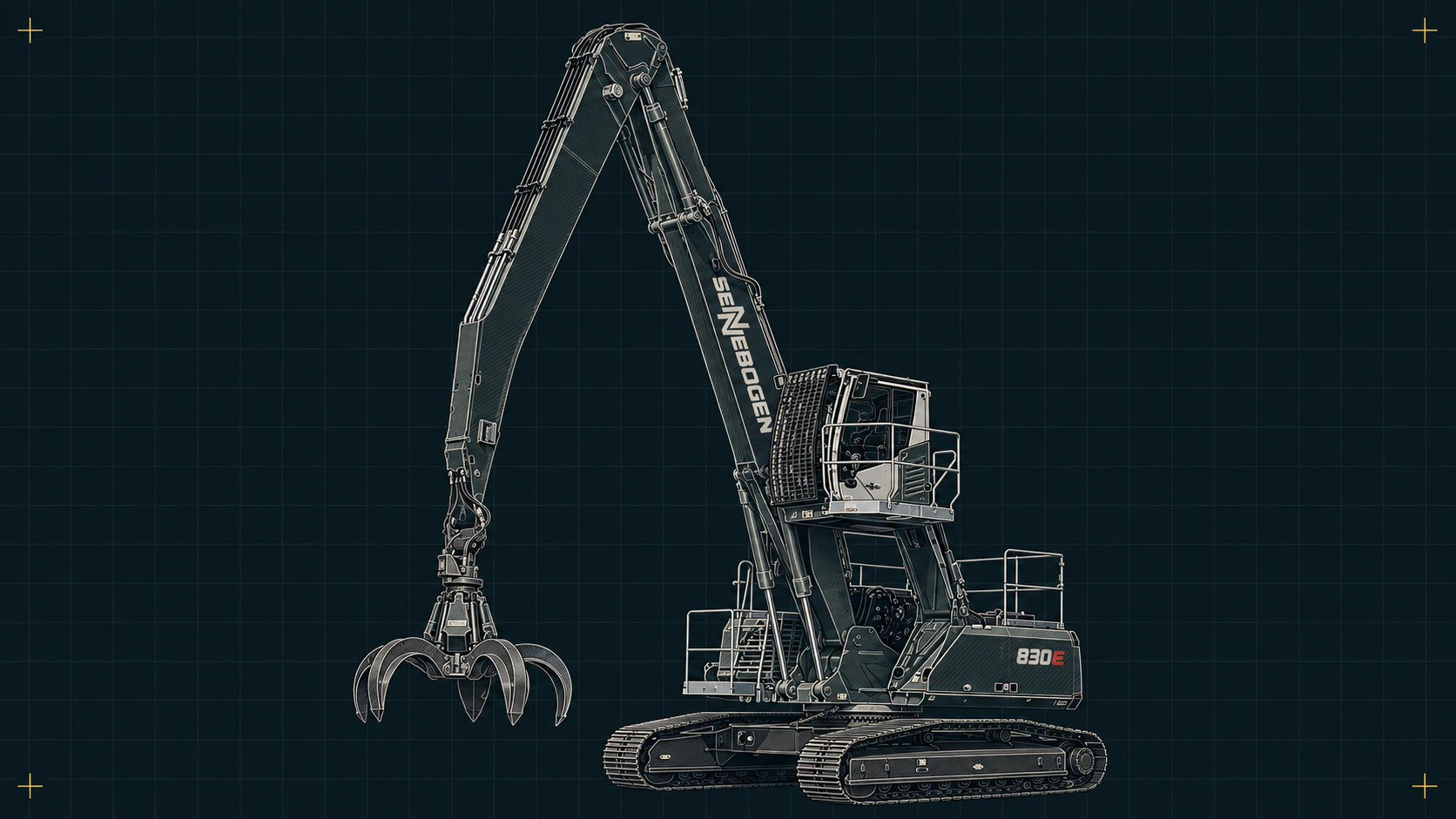
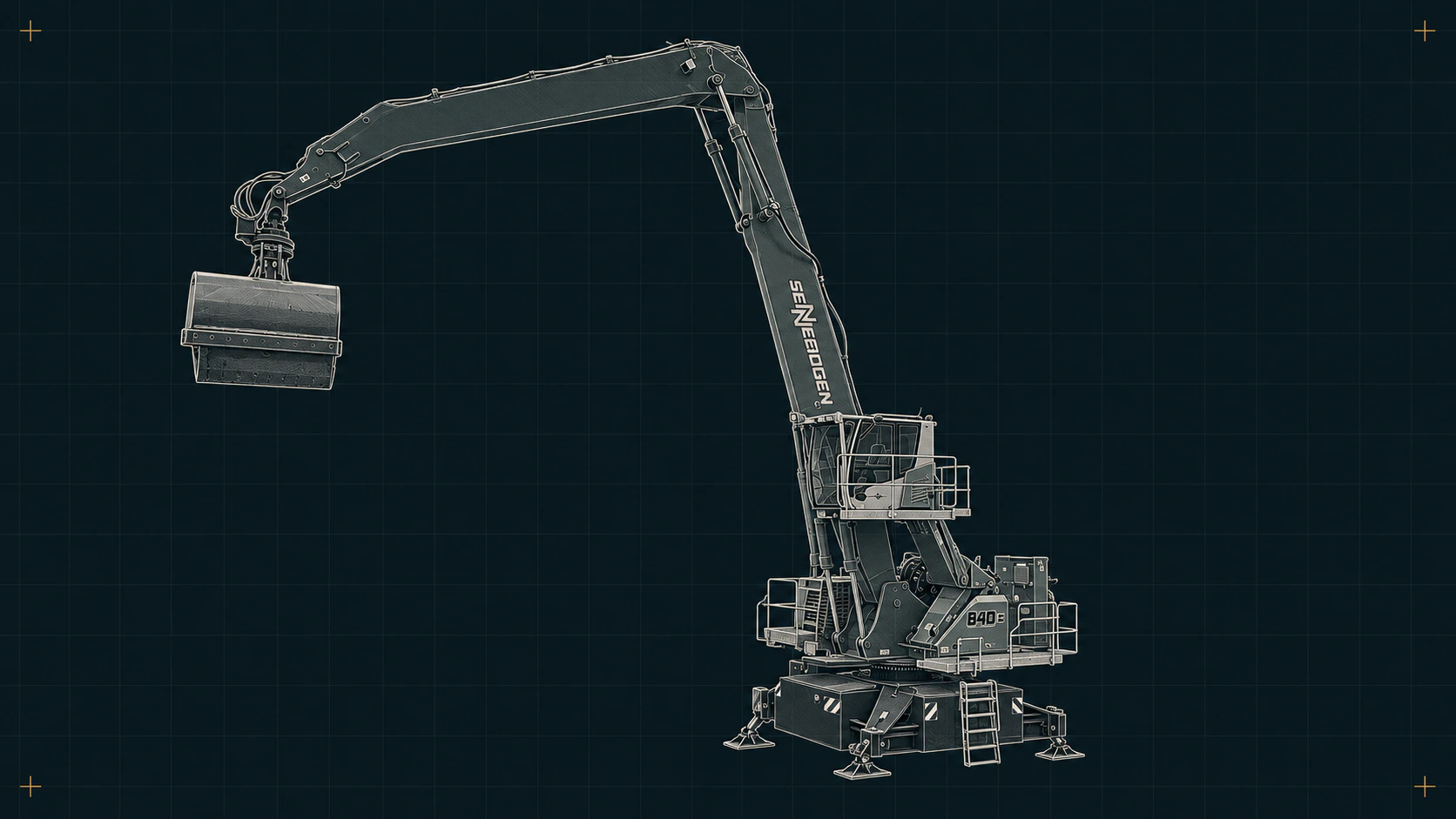
Wheeled, tracked or stationary setup
Check support, access and working reach
Used condition
Structure, pins, hydraulics and cab system
Arrange inspection for the exact material-handling package
Choose the machine architecture
Material Handlers: subcategories
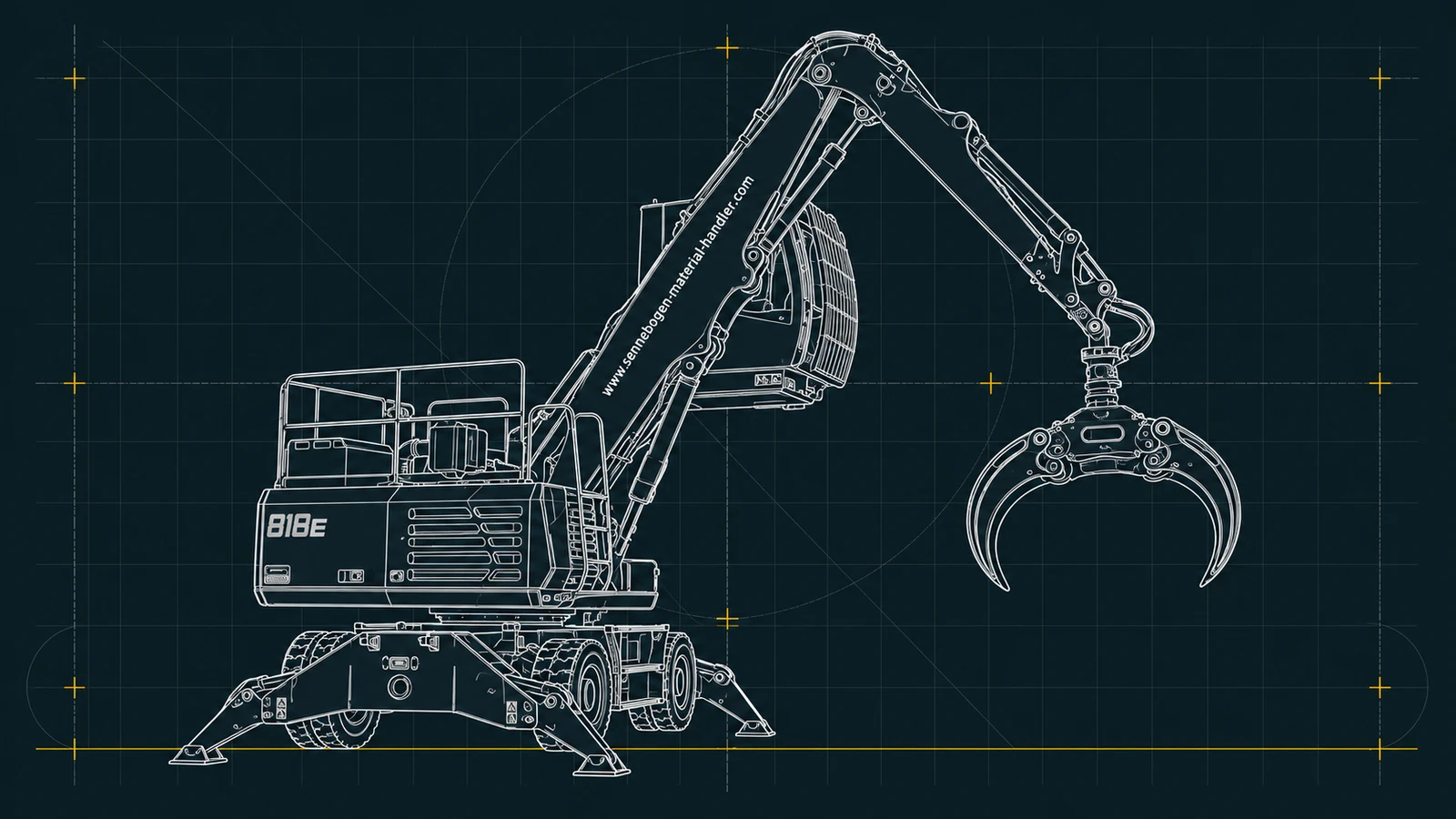
Wheeled material handlers
Dedicated handling machine on a wheeled mobile base.
Configurations to check: Application · Electric or diesel · Cab elevation · Grapple or magnet
Where this category begins and ends
Belongs here
OEM-designated handling machines on wheeled, tracked or fixed bases.
Belongs elsewhere
Ordinary excavators with grapples, forestry-specific log loaders, telehandlers, wheel loaders and general lifting cranes.
Prepare a useful comparison
Dimensions and configuration to check
Transport or installation dimensions
Maximum reach
Cab-raised height
Tail-swing radius
Stabilizer footprint
Lift-height reference
Compare the same configuration, including attachments, folded parts, counterweights and stabilizers. Transport dimensions can differ substantially from the working setup.
Before comparing used machines
Inspect handling boom, slew system, cab lift and stabilizers. Apply the correct tool, radius and support configuration to lift data.
Manufacturer references
Product-family references for this guide; individual model measurements require their own documentation.

 Earthmoving
 Forestry
 Material Handling & Lifting