Write the complete trench brief
Record trench length, required width and depth, access points, ground information and the installation sequence supplied by the project team. Identify existing-utility information and the excavation method before shortlisting equipment. A manufacturer working-range chart can screen machine geometry, but it does not determine excavation support, utility clearance or an approved operating method.
Compare excavation methods at the right scale
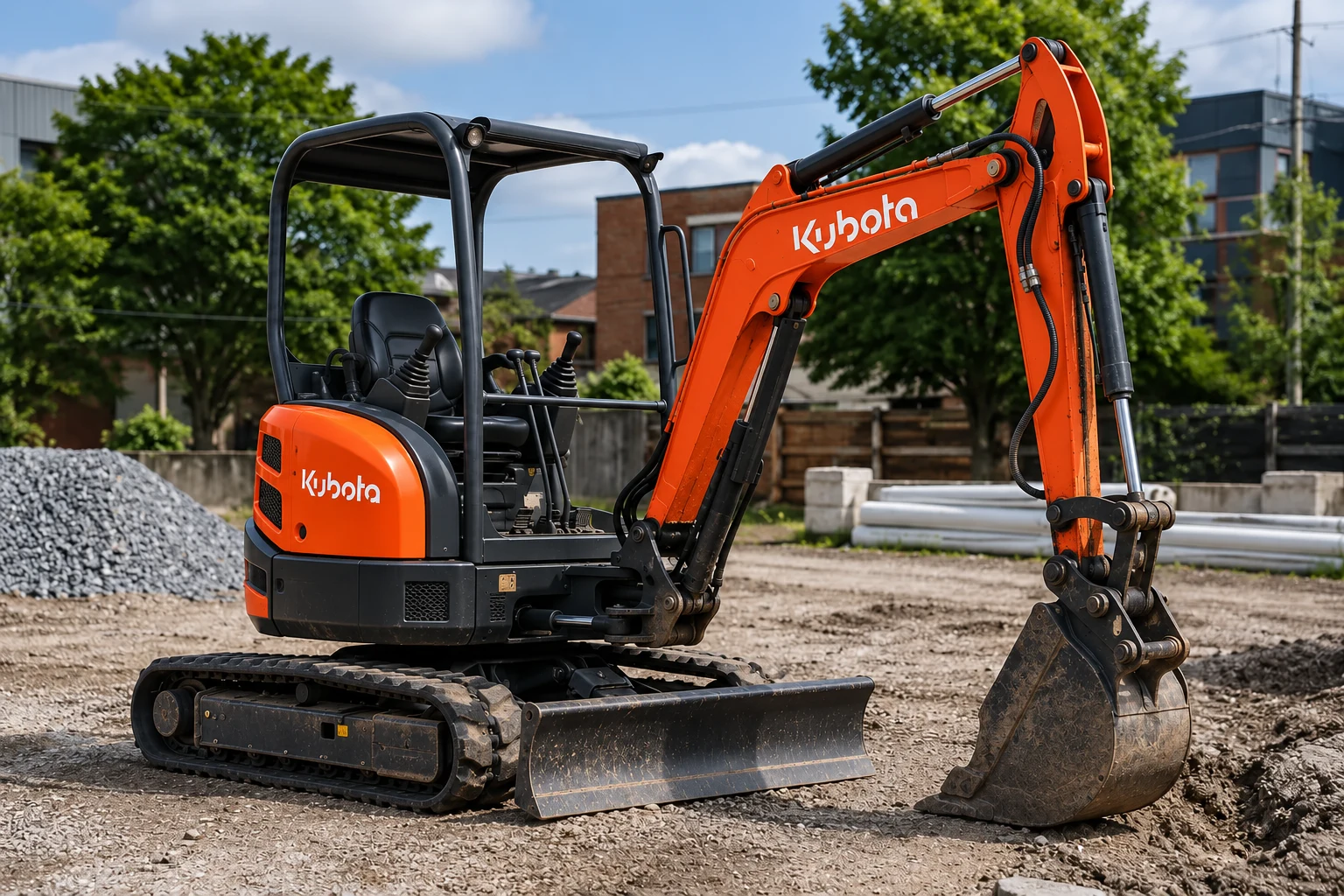
A compact excavator offers flexible bucket work and repositioning; a dedicated chain trencher creates a different excavation and spoil-handling sequence. The RTX450/TR455 reference is a utility-sized attachment package, while the T655III includes larger chain or rockwheel choices. Do not compare basic tractor length with an excavator’s complete bucket-included transport length.
Specify tools and support equipment
Name the bucket or chain width, coupler, breaker if required and hydraulic interface. Plan where excavated material goes and how bedding, installation and backfill reach the work. A machine that digs the trench may still need a loader, carrier, compactor or separate removal vehicle. Confirm exact tool fitment with the supplier; a related attachment link is a research path.
Quote the complete work-ready package
Request configured dimensions, actual transport mass, tool inventory and inspection evidence. Model digging, moving, spoil removal and restoration separately, with explicit crew and utilization assumptions. Compare rental or ownership using the same scope; no generic trench production rate or fuel consumption is assumed.
Decision worksheet
| Requirement | Evidence to collect | Effect on equipment choice |
|---|---|---|
| Trench geometry | Project width/depth and realistic machine position | Select the actual boom, bucket or trencher attachment |
| Access and spoil | Gate, setup and spoil/vehicle plan | Include the complete operating envelope and support machines |
| Restoration | Backfill and surface requirements | Add appropriate compaction and reinstatement equipment |
Before you decide
Questions to close out
- Confirm the project excavation method and utility information.
- Identify the exact tool and carrier configuration.
- Obtain complete transport dimensions and mass.
- Quote spoil handling and restoration alongside excavation.
A useful trenching shortlist covers the whole installation sequence and makes every unresolved configuration question visible.
Continue your research
Sources and further reading
Technical references supporting this guide. Machine manuals and documentation for the actual configuration remain essential when applying the guidance.