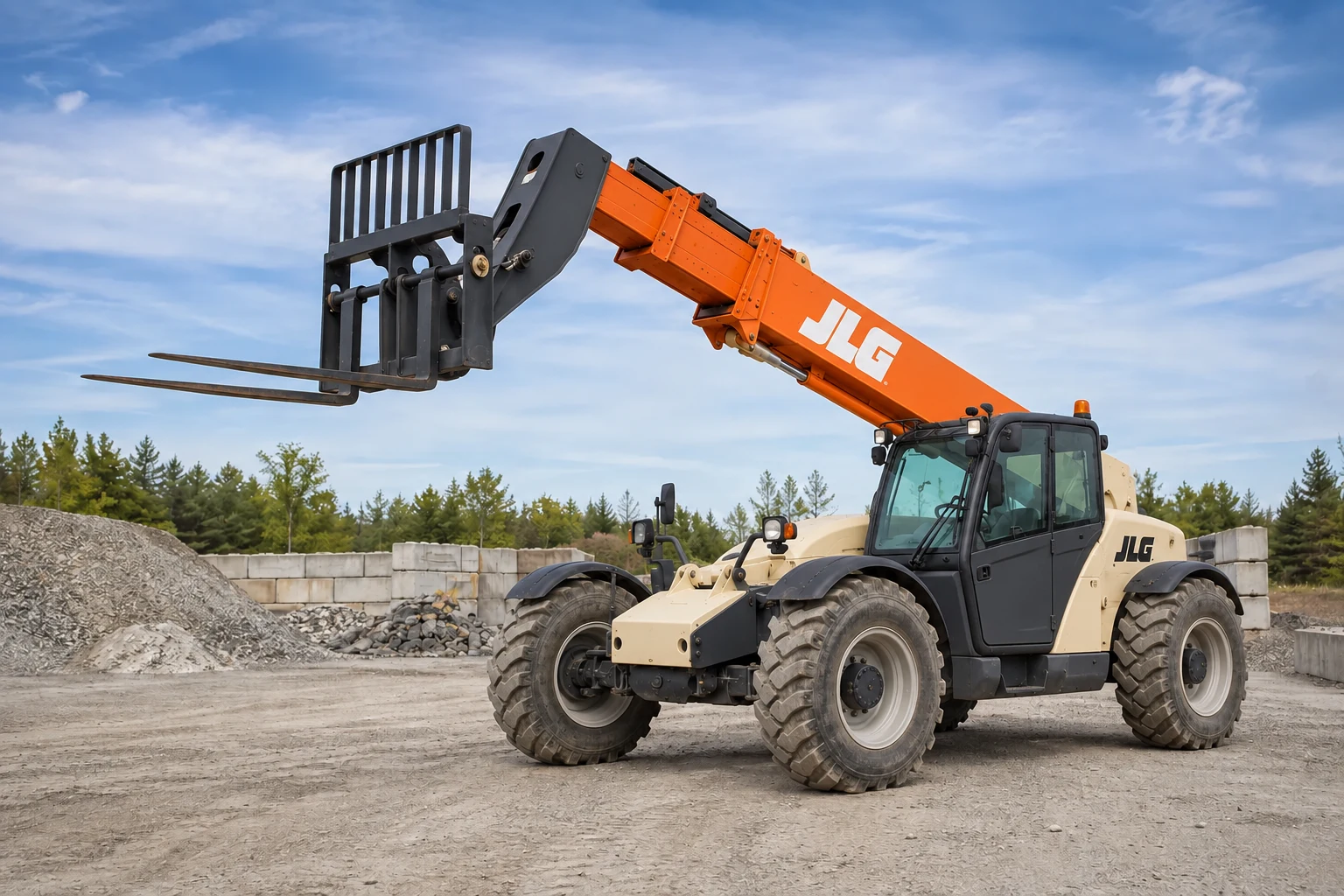
Describe the load and placement
Record load weight, dimensions, centre of gravity, attachment and the required horizontal reach and height. Include the approach and setup area. JLG explains load-chart use through the relationship between boom angle, extension and placement. Use the exact chart for the machine and attachment; do not interpolate a safe capacity from the maximum numbers on a specification card.
Match the chart to the installed machine
Verify carriage, forks, tires, stabilizers and any other chart-dependent configuration. Photograph the chart and identification plate and reconcile them with the machine records. A different carriage or attachment can require different documentation. If the correct chart is missing or its applicability is unclear, obtain confirmation before treating the machine as suitable for the planned lift.
Inspect the boom and carrier
Have a qualified inspection cover boom structure, wear pads, extension mechanism, cylinders, forks, carriage, steering, brakes and safety systems. Document tire condition and stabilizer operation where fitted. Functional demonstrations should be planned and carried out by competent personnel. An unloaded extension video is not evidence that the machine can safely handle the intended load.
Price the complete handling system
Include the correct forks or attachment, any replacement charts or documentation, repairs, transport and initial service. Consider visibility and access at the intended site. Keep training and site-specific lift planning separate from the purchase comparison. Buying a machine with enough reach does not itself establish an acceptable lifting operation.
Decision worksheet
| Decision | Evidence to collect | How it changes the shortlist |
|---|---|---|
| Placement | Load, height, reach and load centre | Defines the actual chart location |
| Configuration | Matching chart, forks and carriage | Confirms the applicable rating |
| Boom condition | Specialist inspection and service records | Identifies repair and further-assessment needs |
Before you decide
Questions to close out
- Write down the actual load and placement.
- Match the chart to the fitted attachment.
- Inspect boom, forks and safety systems.
- Confirm transport and commissioning needs.
Treat missing chart applicability as an unresolved suitability question. Capacity at maximum reach matters far more to a distant placement task than the largest number in the brochure.
Continue your research
Sources and further reading
Technical references supporting this guide. Machine manuals and documentation for the actual configuration remain essential when applying the guidance.