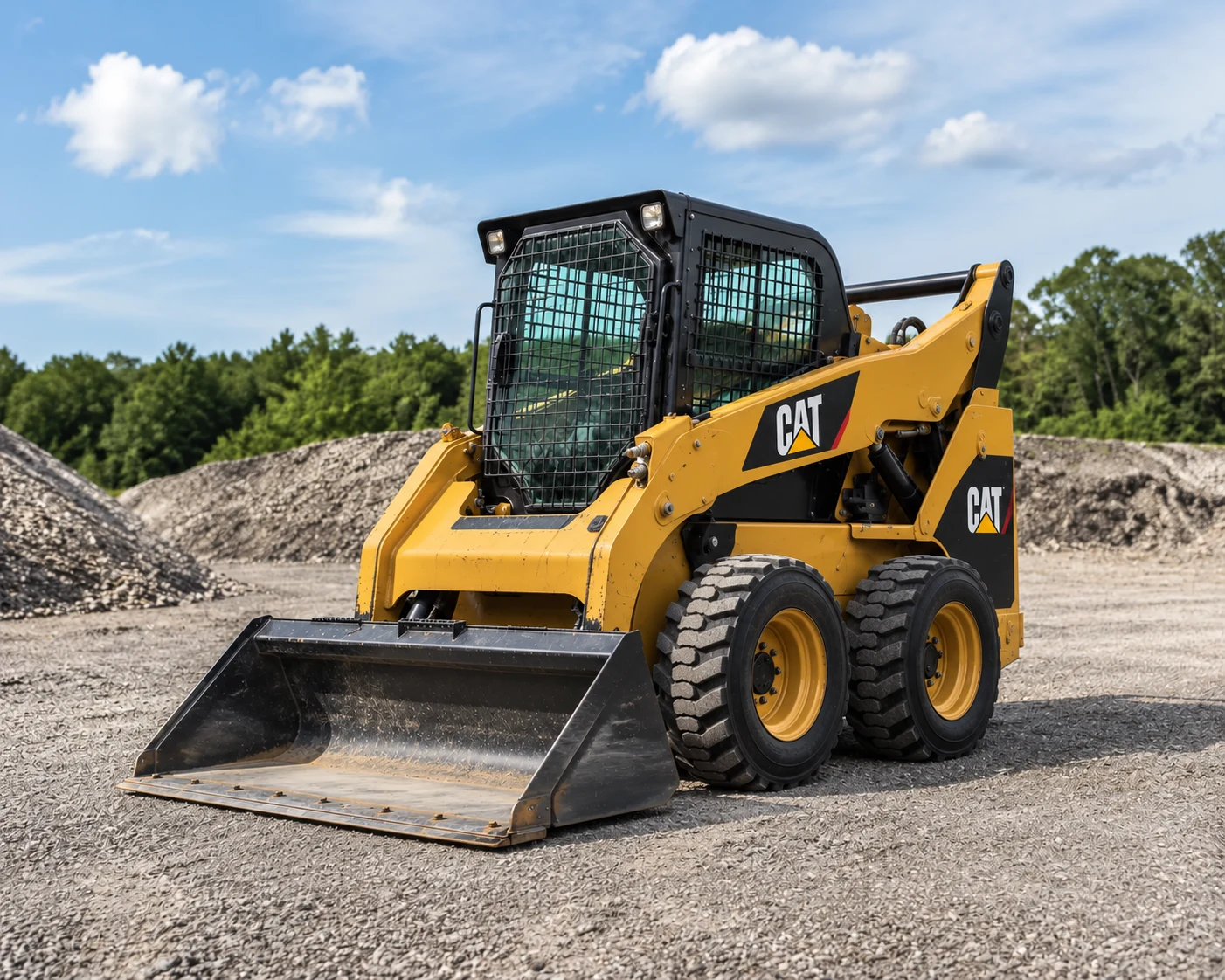
Define the surface and handling task
Describe travel on pavement, gravel or other surfaces and identify the material to be handled. Note access, turning room and the loading target. Tire type and condition should suit the planned duty. When considering tracks as an alternative, compare the complete machine package and its wear requirements rather than assuming one running-gear type is always preferable.
Verify the lift and capacity basis
Record the actual bucket or forks, lift path and counterweight configuration. Compare rated operating capacity with the same type of rating on the alternative machine. Tipping load and hydraulic lift capability are different measures. The manufacturer's documented arrangement and attachment guidance should determine the applicable limits, particularly after tools or weights have been changed.
Confirm the tool interface and controls
Identify the mounting system, locking function, auxiliary connections and electrical controls. A universal-style plate does not confirm hydraulic compatibility. Ask the supplier to check the complete attachment pairing and arrange a demonstration by a competent operator. Document missing harnesses, hoses or activation requirements before including the attachment's capability in the purchase decision.
Inspect the drive and loader package
Have a qualified inspector assess drive response, wheels, bearings or chaincase where applicable, linkage, coupler and safety interlocks. Identify leaks and structural repair areas for further evaluation. Keep repair quotes separate from routine servicing so the comparison shows what is needed before work and what can be scheduled later.
Decision worksheet
| Decision | Evidence to collect | How it changes the shortlist |
|---|---|---|
| Tires and travel | Surface, distance and tire condition | Matches running gear to the work |
| Lift package | Attachment and rating basis | Checks usable handling capability |
| Tool controls | Circuit and harness inventory | Identifies missing commissioning items |
Before you decide
Questions to close out
- Confirm lift path and rating definitions.
- Record tire sizes and condition.
- Test interlocks and attachment locking.
- Obtain quotes for missing tool controls.
The right skid steer is the one whose actual configuration completes the job with a clear repair and commissioning budget. A similar attachment plate is only the start of the compatibility check.
Continue your research
Sources and further reading
Technical references supporting this guide. Machine manuals and documentation for the actual configuration remain essential when applying the guidance.