Match ground and attachment duty
Describe the surfaces, slopes to be assessed by the operator, travel and tool demands. Choose the attachment first when it defines the job, then verify the carrier package. A forestry cutter, planer or snowblower may have circuit and guarding requirements that differ from a bucket. Do not assume that every machine of a model family carries the same hydraulic options.
Compare loading geometry correctly
Identify radial or vertical lift, the fitted bucket or forks and the required loading height. Keep tipping load and rated operating capacity separate. Check that the rating basis matches the configuration being inspected. Ask for the appropriate manufacturer information when attachments or counterweights have changed; a headline number does not resolve that change.
Inspect the entire track system
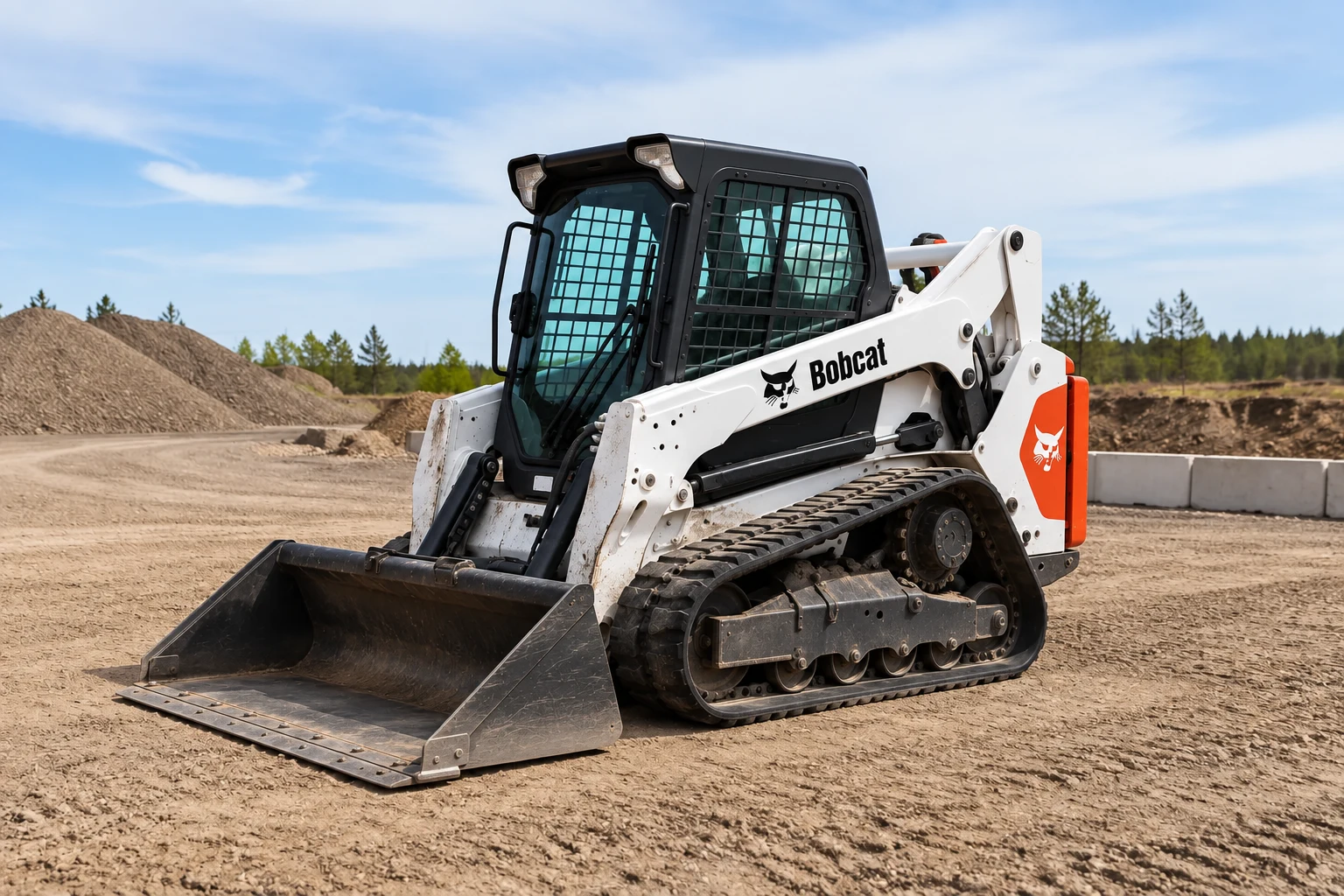
Record track type, sprockets, rollers, idlers, tensioning system and final-drive condition. Ask what was renewed during any recent track replacement. Check the loader linkage, mounting plate and control interlocks through a qualified inspection. Keep access to the cooling system and evidence of previous cleaning or service in the review, especially for debris-intensive work.
Price readiness for the first job
Include wear repairs, attachment commissioning, transport and initial service. Ask for a practical demonstration of the main attachment if it is included. Compare the cost of returning each candidate to the same working standard. A freshly fitted pair of tracks does not establish the condition of the remaining running gear or hydraulic system.
Decision worksheet
| Decision | Evidence to collect | How it changes the shortlist |
|---|---|---|
| Track system | Component report and repair history | Separates new tracks from a renewed system |
| Hydraulics | Fitted package and attachment requirements | Checks the intended work tool |
| Lift | Rating definition and installed tool | Keeps capacity comparisons valid |
Before you decide
Questions to close out
- Identify the hydraulic option from records.
- Inspect the complete running gear.
- Demonstrate fitted tools and controls.
- Price commissioning and initial repairs.
Treat the first attachment and first worksite as the acceptance test for the purchase. Resolve configuration questions before the machine is committed to that job.
Continue your research
Sources and further reading
Technical references supporting this guide. Machine manuals and documentation for the actual configuration remain essential when applying the guidance.