Separate arrival, travel and work
Prepare a route with gate width, overhead points, turns, surface support and the work area. Record the actual attachment, cab/canopy and travel posture. Distinguish transport on a trailer from travel within the site and from the operating envelope; those are three different dimensional questions.
Read retractable and compact-radius references precisely
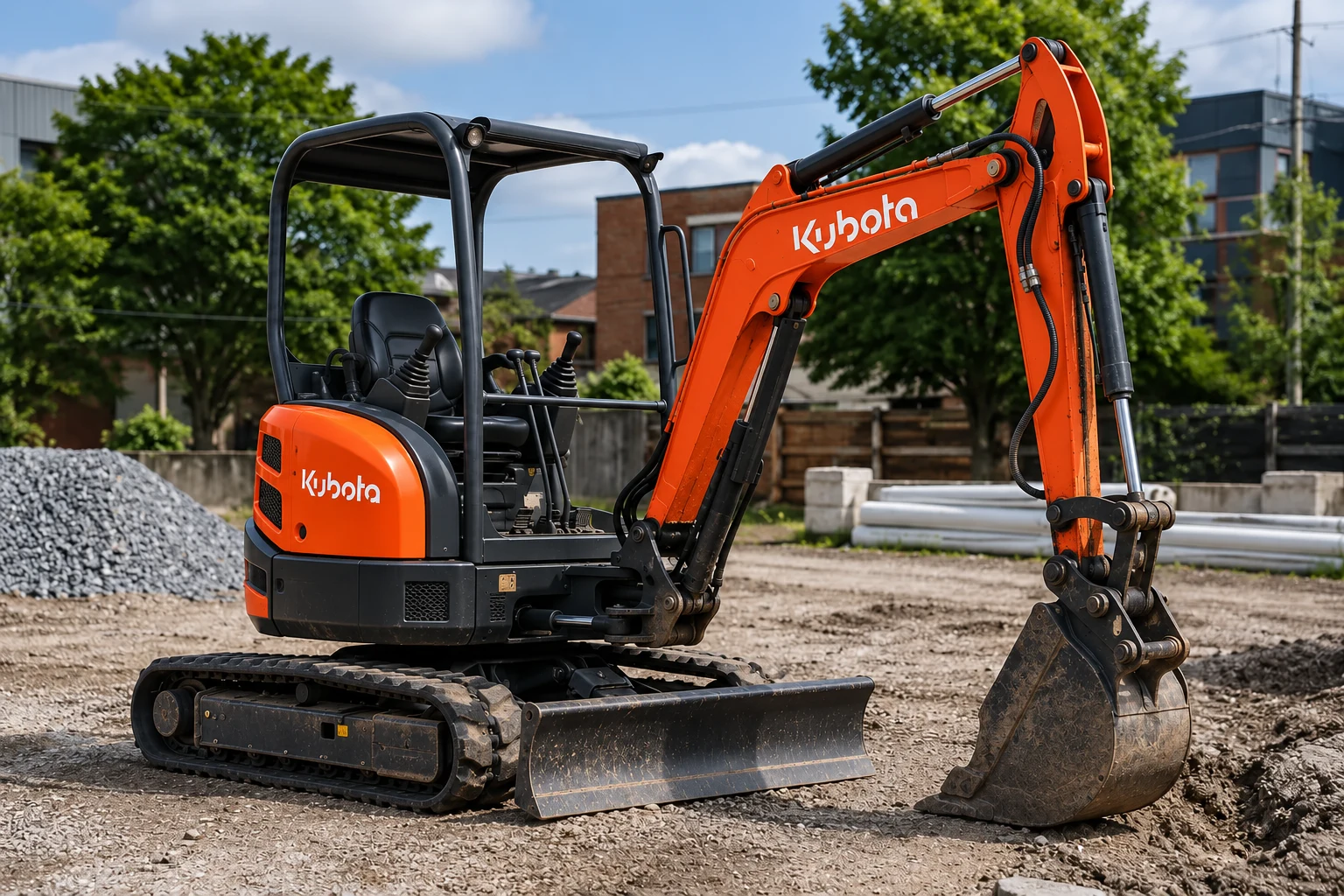
The TB210R record distinguishes extended-track width from the narrower travel arrangement. Follow manufacturer instructions for the required working stance rather than assuming the narrowest setting is suitable for digging. A compact-radius excavator such as the 305 CR still has front attachment sweep and configuration-dependent rear clearance.
Check tools as part of the width
A compact loader’s bucket or grapple may be wider than its tires or tracks. Compare the widest fitted item, fork projection and height in the approved travel posture. If a tool must be removed to enter, include a supported handling and reattachment procedure, storage space and the time involved.
Compare access preparation with machine compromise
A smaller machine may avoid access work but need more repositioning or a different support machine. Price those scenarios using the actual task and transport package. Do not infer a precise clearance from decorative blueprint artwork or use an unresolved dimension as an assumed fit.
Decision worksheet
| Requirement | Evidence to collect | Effect on equipment choice |
|---|---|---|
| Narrowest route point | Measured opening and complete configured width | Reject an unconfirmed fit before quoting work |
| Overhead and turns | Height, posture and turning envelope | Check cab/ROPS and attachment projections |
| Working room | Front sweep, rear radius and required stance | A travel fit does not establish an operating fit |
Before you decide
Questions to close out
- Record all route restrictions.
- Match every dimension to the same configuration.
- Confirm manufacturer travel and working positions.
- Include attachment handling and access preparation.
Choose the smallest package that meets the actual work requirement with documented access, rather than the smallest headline dimension.
Continue your research
Sources and further reading
Technical references supporting this guide. Machine manuals and documentation for the actual configuration remain essential when applying the guidance.