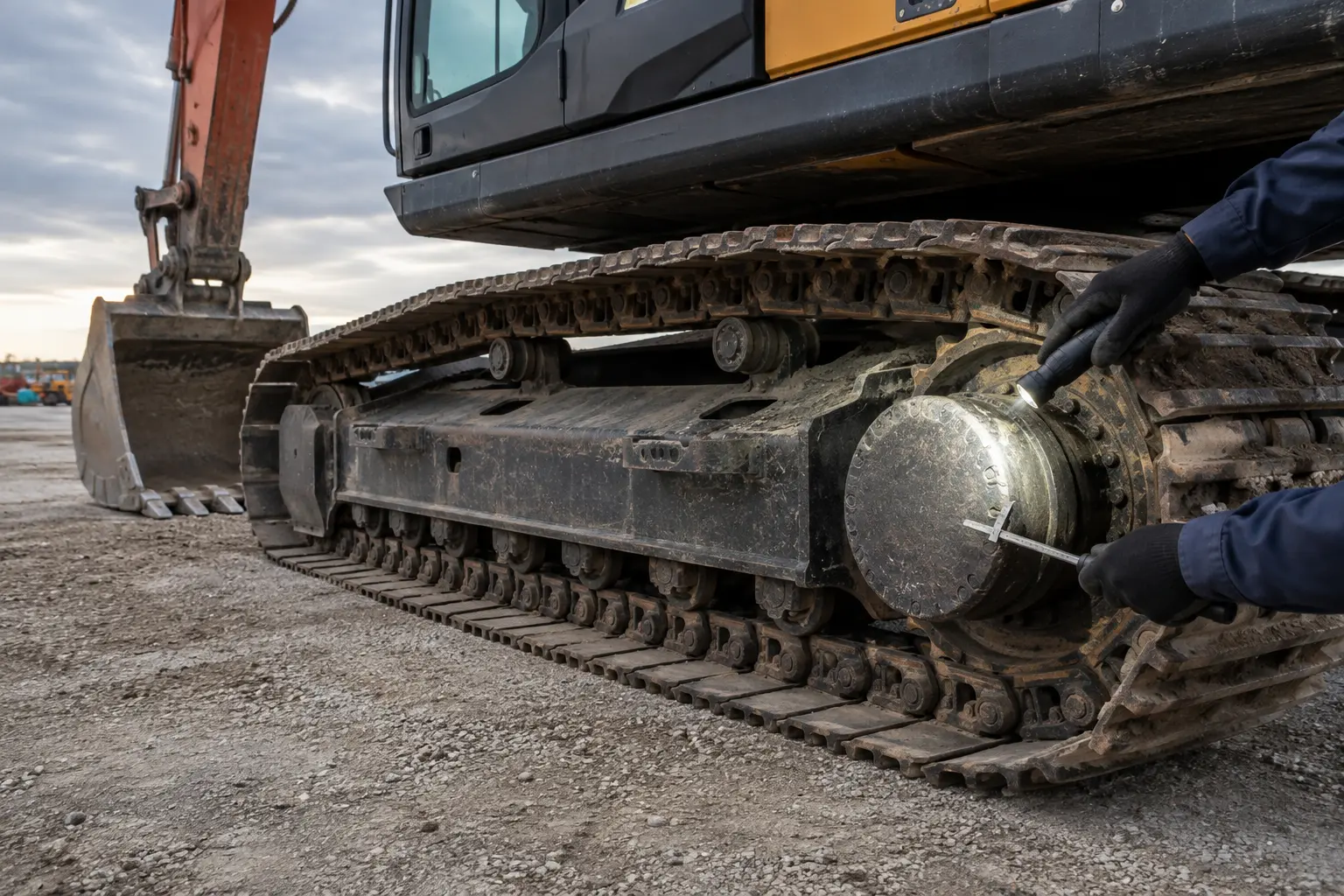
Reconcile the hour record
Collect dated service invoices, inspection reports and available machine-generated records. Compare them with the displayed meter and ask about replacement displays or control modules. A discrepancy needs explanation and supporting documentation. Keep total-machine hours separate from hours on a rebuilt component. Do not describe a machine as low-hour merely because a replacement meter displays a smaller number.
Understand the duty behind the number
Ask where the machine worked, what tools it carried and how much time it spent travelling or waiting. Use available utilization reports to separate categories of recorded time, while retaining each system's definitions. Idle time is not productive output, but it also does not establish that all systems escaped wear. A machine's records and physical condition should tell a consistent story.
Evaluate repairs by scope
An invoice for an engine repair says little about the remaining condition of the undercarriage, hydraulics, structure or attachments. Ask which components were replaced, which were reused, who performed the work and whether supporting inspection results are available. Treat a documented repair as information about that component. Keep unresolved defects in the budget even when a major rebuild sounds reassuring.
Compare condition-adjusted alternatives
Build a worksheet with asking price, immediate repairs, planned service, transport and missing tools. Use comparable machines of the same generation and configuration where evidence is available. If sold-price evidence is unavailable, call the result a planning comparison rather than a market valuation. Do not apply a universal dollar deduction per operating hour across unrelated equipment classes.
Decision worksheet
| Decision | Evidence to collect | How it changes the shortlist |
|---|---|---|
| Displayed hours | Dated records and meter replacement history | Determines confidence in the stated usage |
| Component work | Invoice scope and subsequent operation | Clarifies which risk was addressed |
| Remaining wear | Inspection and repair quotations | Establishes the usable-machine budget |
Before you decide
Questions to close out
- Reconcile dates and meter readings.
- Distinguish total hours from component hours.
- Ask about duty and attachment history.
- Keep unresolved repair exposure in the comparison.
Two machines with similar hours can require very different first-year spending. Use the hour record to ask better questions, then let inspection and documented configuration drive the decision.
Continue your research
Sources and further reading
Technical references supporting this guide. Machine manuals and documentation for the actual configuration remain essential when applying the guidance.