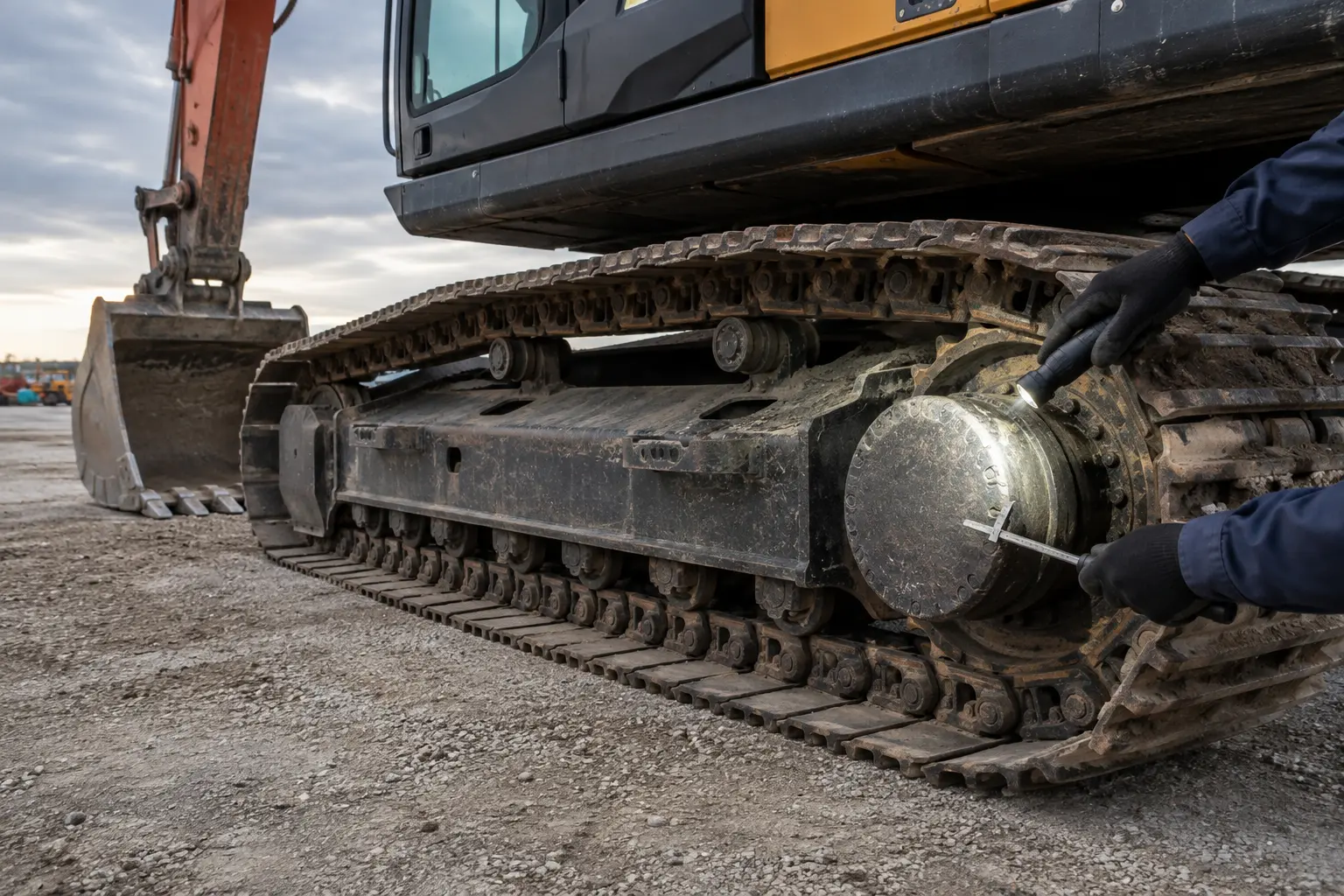
Identify what is fitted
Record the track type, shoe width and any recent work. Ask whether replacement covered the complete system or selected components. The two sides can have different repair histories. Keep part numbers and invoices where available, and photograph both track frames. Rubber-track and steel-track systems require different inspection methods, so obtain the procedure for the actual machine rather than applying a universal checklist.
Request measurements with a basis
Ask a qualified inspector to identify links, bushings, sprockets, rollers and idlers as applicable and compare measured condition with the relevant manufacturer service information. A percentage without the component, measurement method and limit is hard to evaluate. Do not calculate remaining service hours from a photograph or linearly extrapolate them from one wear reading; duty and maintenance can change the outcome.
Look at the pattern and the operating history
Ask the inspector to investigate uneven wear, damaged guides, leakage, tracking concerns and mixed components. Discuss the ground material, travel duty and cleaning practices with the seller. Those observations help direct an investigation but do not independently diagnose its cause. Track adjustment and any release of stored energy belong to trained personnel following the machine manual.
Price a coherent repair plan
A quotation should identify the parts to replace, components proposed for reuse, labour, freight, workshop requirements and expected downtime. Compare a partial repair with the inspector's recommended system plan. Include the effect on your first contracted jobs. If the machine will soon require transport to a shop, combine that cost with the replacement work instead of treating it as an unrelated future expense.
Turn track wear measurements into a usable report
For each side, ask for the component identity, measurement location, measured value and unit, tool used, and the applicable manufacturer reference. Record who measured it and when. If a report supplies a wear percentage, request the conversion basis and whether the number means worn or remaining. Volvo distinguishes visual checks from undercarriage management based on measurements and brand-specific wear conversion information.
Keep left and right findings separate. Missing measurements should remain unmeasured, not be replaced with an average from another component. Track tension is a separate manual-specific check; this buyer record does not give an adjustment procedure.
What to request for sprockets and track rollers
Volvo’s visual checklist identifies sprocket tooth damage, surface breakup, lateral wear and fastening concerns. For rollers it separates upper-roller flange or shaft problems from lower-roller damage and includes lubricant leakage. Ask the inspector to identify the affected component and side in the photograph, then state the required measurement or investigation.
A photograph can document a concern without establishing its cause or remaining service life. Have the technician explain whether the finding changes the component replacement plan, requires further access, or remains unresolved. Use the report and machine-specific service criteria together when requesting a repair quotation.
Decision worksheet
| Decision | Evidence to collect | How it changes the shortlist |
|---|---|---|
| Wear percentage | Component name, measurement and service basis | Makes competing reports interpretable |
| Recent replacement | Invoice and list of reused components | Shows what the repair did and did not renew |
| Repair budget | Parts, labour, freight and access | Establishes the actual cost of returning to work |
| Sprocket finding | Side, component photo, tooth/fastener observation and inspector follow-up | Identifies what needs assessment without assigning a remaining-life percentage |
| Roller finding | Upper or lower location, damage/leak observation and measurement request | Keeps different roller conditions from being collapsed into one rating |
Before you decide
Questions to close out
- Photograph both complete undercarriages.
- Collect a component-level measurement report.
- Document mixed or recently changed components.
- Ask for a written repair scope and downtime estimate.
Use measurements to guide a service decision, not to promise a remaining number of hours. Keep the component report alongside the quotation so that exclusions are visible.
Continue your research
Sources and further reading
Technical references supporting this guide. Machine manuals and documentation for the actual configuration remain essential when applying the guidance.