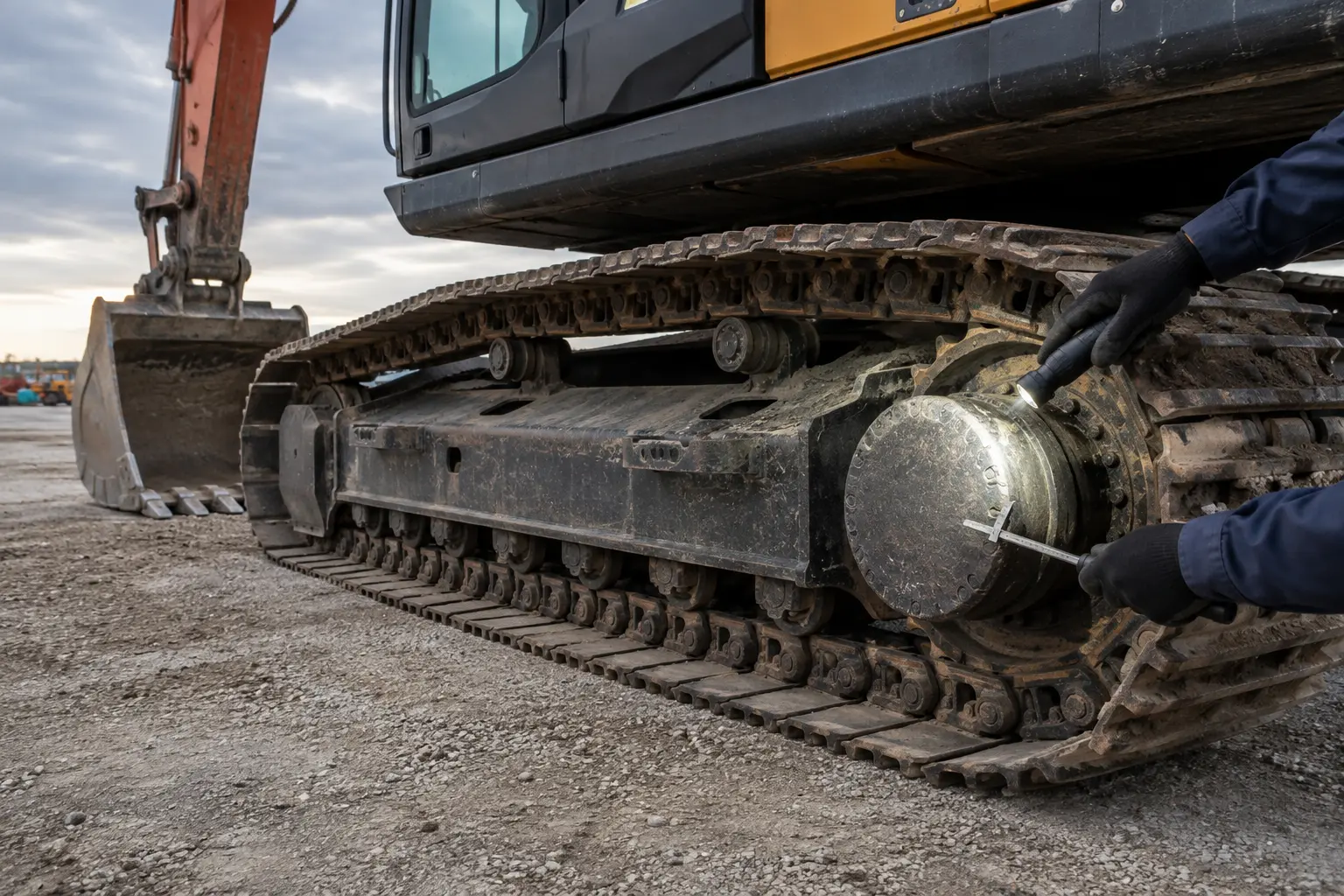
Establish the exact system
Record the machine serial/PIN, engine identification, region and documented emissions configuration. Ask for the correct operation and maintenance information. Do not assume that every diesel machine uses the same combination of particulate filter, exhaust-fluid system or other components. Keep regional and generation differences visible when comparing used equipment.
Ask for diagnostic and service evidence
Request current and historical fault information from a qualified technician, along with records of related repairs or component replacement. Ask the seller about interrupted work, warning recurrence and the duty cycle preceding service. A cleared display is not a substitute for a diagnosis. Treat missing or altered equipment as a material question requiring appropriate professional and regulatory confirmation.
Understand regeneration without improvising it
John Deere describes DPF regeneration as a process involving increased exhaust temperatures to address accumulated soot. Procedures, conditions and restrictions belong to the exact machine manual. During a purchase inspection, have authorized personnel evaluate system function. Do not initiate a generic regeneration procedure, change settings or operate around hot exhaust based on an online checklist.
Budget the actual unresolved work
Obtain a written diagnostic scope and repair quotation when a concern exists. Include downtime, transport to service and any required follow-up. Keep an unpriced fault as an open item rather than assuming it needs only routine cleaning. Compare the repaired, documented machine with alternatives using the same work schedule and support arrangements.
Decision worksheet
| Decision | Evidence to collect | How it changes the shortlist |
|---|---|---|
| System identity | Engine, region and applicable manual | Prevents applying the wrong service assumptions |
| Fault history | Qualified diagnostic report | Separates a cleared warning from a resolved issue |
| Readiness | Repair scope and support availability | Establishes the cost of returning to work |
Before you decide
Questions to close out
- Identify the exact engine and system.
- Request diagnostic and repair records.
- Use the model-specific manual.
- Resolve material warnings before committing to work.
The buying question is whether the installed system is documented, functional and supportable for the intended duty. Avoid treating a warning or a proposed repair as universal across machines.
Continue your research
Sources and further reading
Technical references supporting this guide. Machine manuals and documentation for the actual configuration remain essential when applying the guidance.