Collect the project requirements
Obtain material classification, layer information, moisture expectations and the specified acceptance/testing process from the project team. Record access, edges, structures and trench conditions. Equipment selection must follow those requirements; this guide does not prescribe an engineered compaction method.
Distinguish contact systems
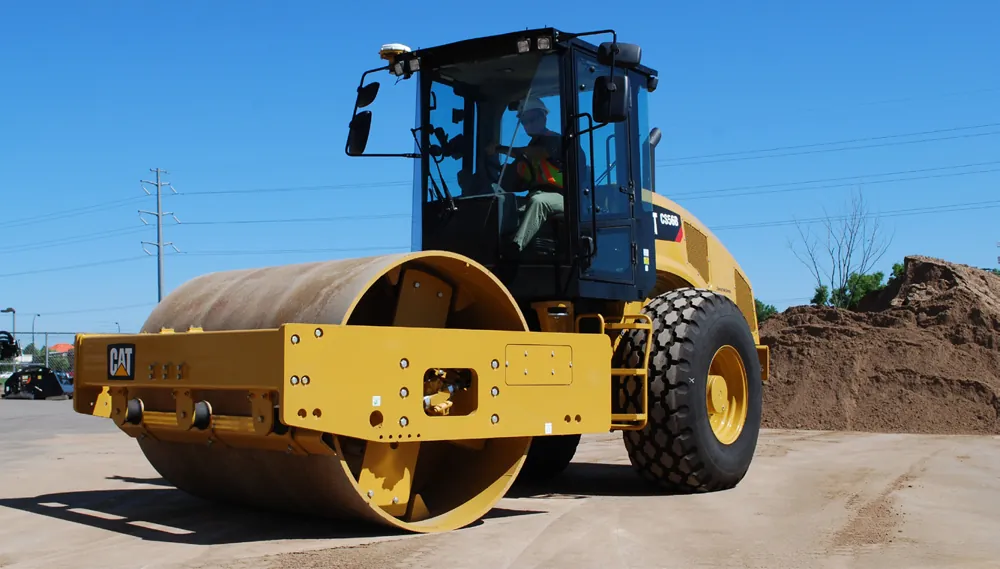
A smooth drum such as the CS56B reference differs from the 815 tamping-foot machine and a trench roller such as the RTLx-SC3. Choose among them using the material and work area with supplier/project support. A padfoot shell or changed wheel/tip package is a configuration, not a reason to reuse another model’s dimensions.
Plan access and support
Check the whole width, turning room and approved operating posture. Remote-control equipment still needs a planned operating and exclusion arrangement under the manufacturer instructions. Identify the loader, grader or excavator used to place material and the testing resources needed to confirm the result.
Validate and inspect
Ask how the proposed equipment will be trialled or validated against the acceptance requirement. Inspect drum/tips, scrapers or cleaners, vibration components where fitted, articulation, controls and service records. Compare maintenance and mobilization with the same material-placement sequence and transparent utilization assumptions.
Decision worksheet
| Requirement | Evidence to collect | Effect on equipment choice |
|---|---|---|
| Material and result | Project specification and test method | Choose a suitable contact/compaction system |
| Work area | Width, edges and access information | Select a configured machine that can cover the area |
| Validation | Approved trial/testing process | Confirm the method instead of guessing passes |
Before you decide
Questions to close out
- Obtain the material and acceptance brief.
- Identify the actual drum, shell or tip package.
- Confirm access and operating instructions.
- Include material placement and testing resources.
A supported compaction choice links the machine, material, work area and acceptance process.
Continue your research
Sources and further reading
Technical references supporting this guide. Machine manuals and documentation for the actual configuration remain essential when applying the guidance.