Choosing conveyors, feeders and stackers for the job
Build your shortlist
Choose the material-flow function
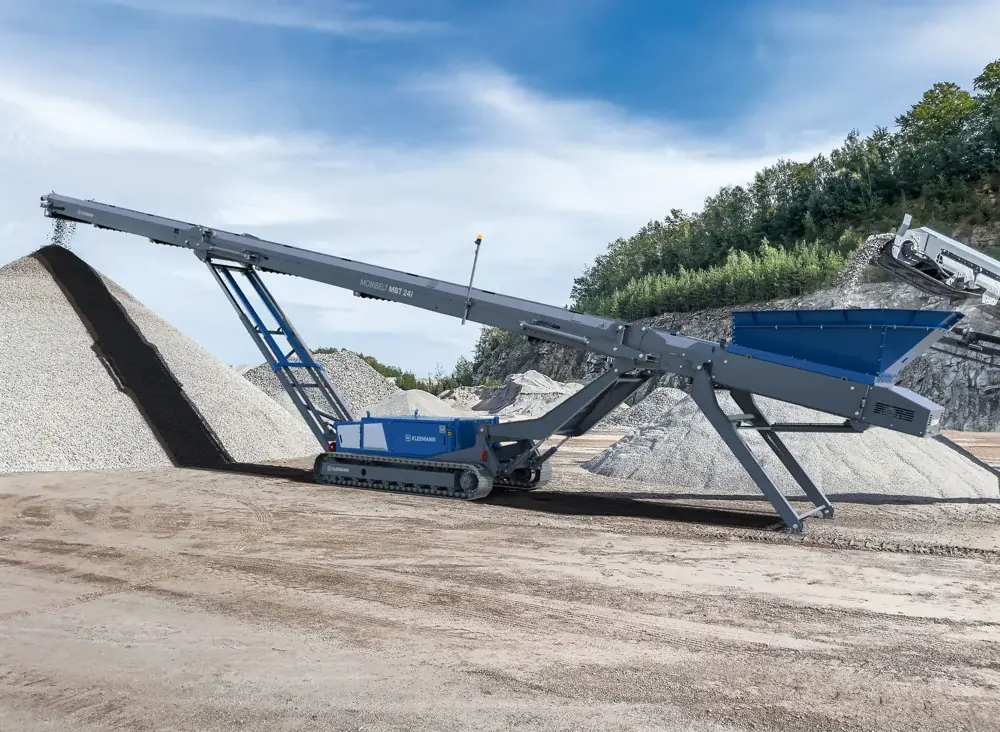
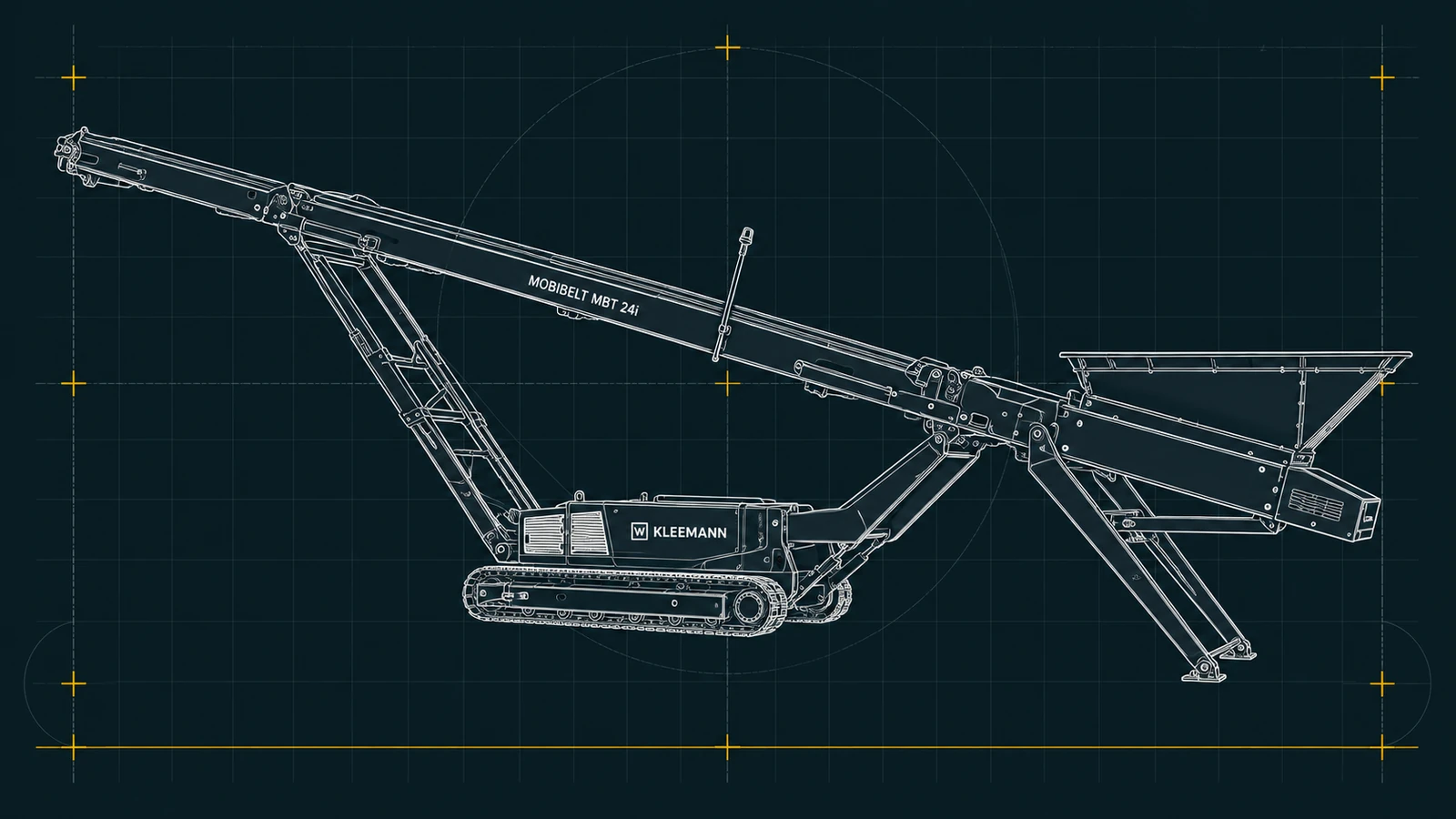
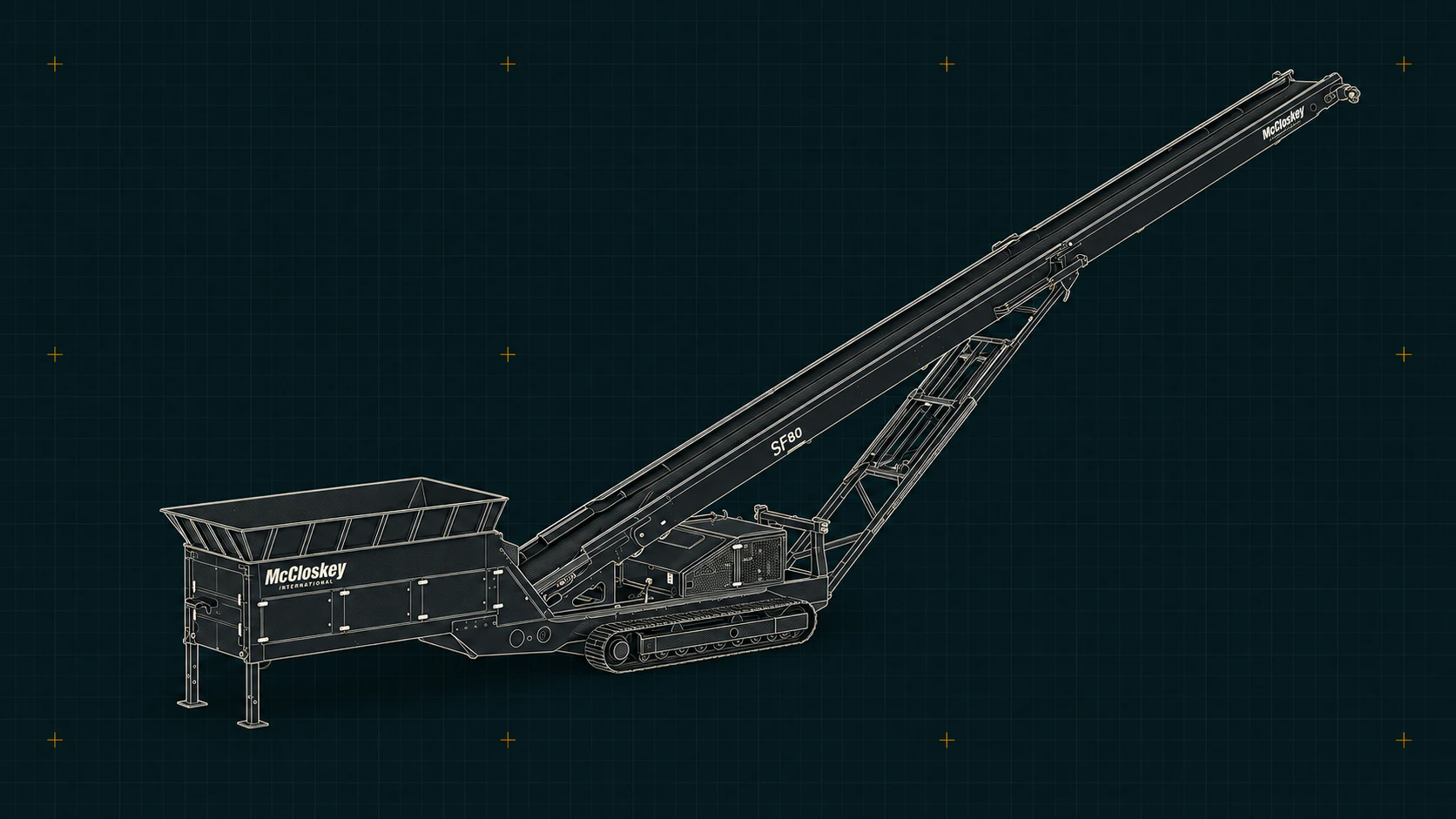
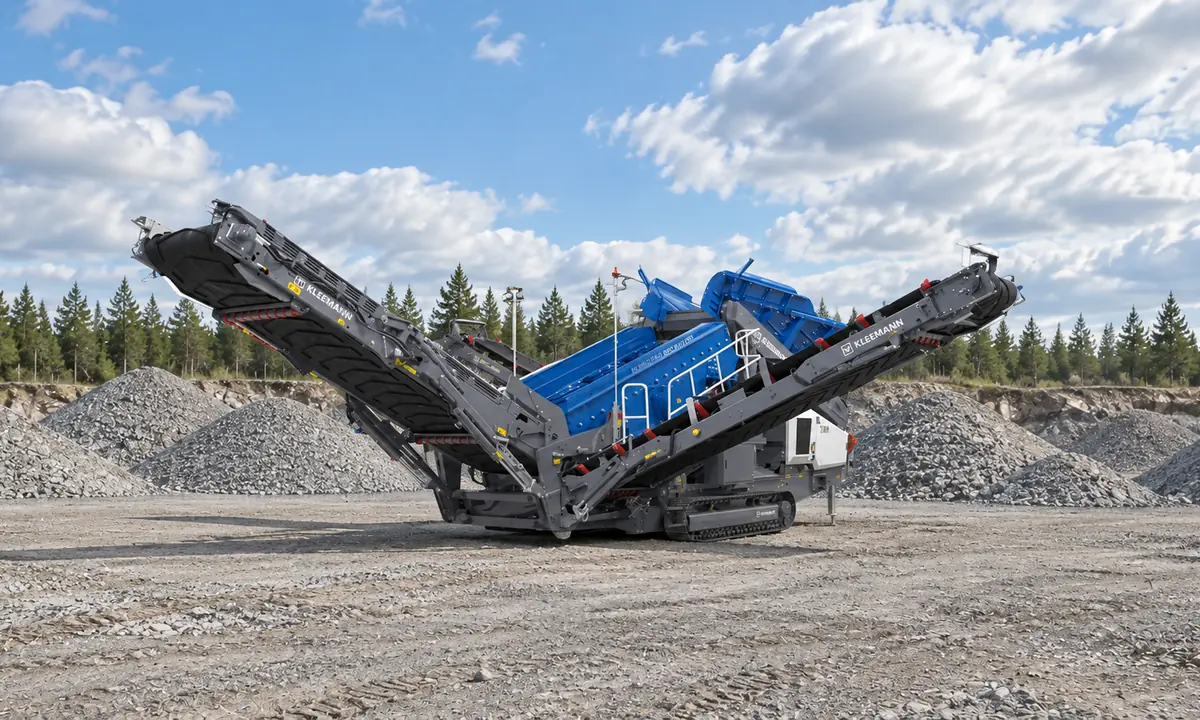
Decide whether the asset meters material, transfers it between machines or builds a stockpile. These functions should not be treated as interchangeable. Identify the belt, hopper and support arrangement and keep folded transport dimensions separate from working reach.
Questions that shape the equipment choice
Job requirement
What to compare
Evidence to obtain
Required function
Feeding, transfer or stockpiling
Identify the complete independently sold asset
Material flow
Belt, hopper and receiving equipment
Confirm the application with the supplier
Layout
Working length, height and stockpile space
Review the complete operating arrangement
Choose the machine architecture
Conveyors, Feeders and Stackers: subcategories
Feeders
Primary function is metering feed; an integral discharge belt does not change the category.
Configurations to check: Radial travel · Telescopic sections · Belt or apron · Mobility
Where this category begins and ends
Belongs here
Separately identified bulk feeders, transfer conveyors and stockpiling stackers.
Belongs elsewhere
Conveyors integrated into a crusher, screen or paver; asphalt material-transfer vehicles; and attachment-only components.
Prepare a useful comparison
Dimensions and configuration to check
Transport and operating dimensions
Belt or feeder width
Feed height
Discharge height
Radial or telescopic working envelope
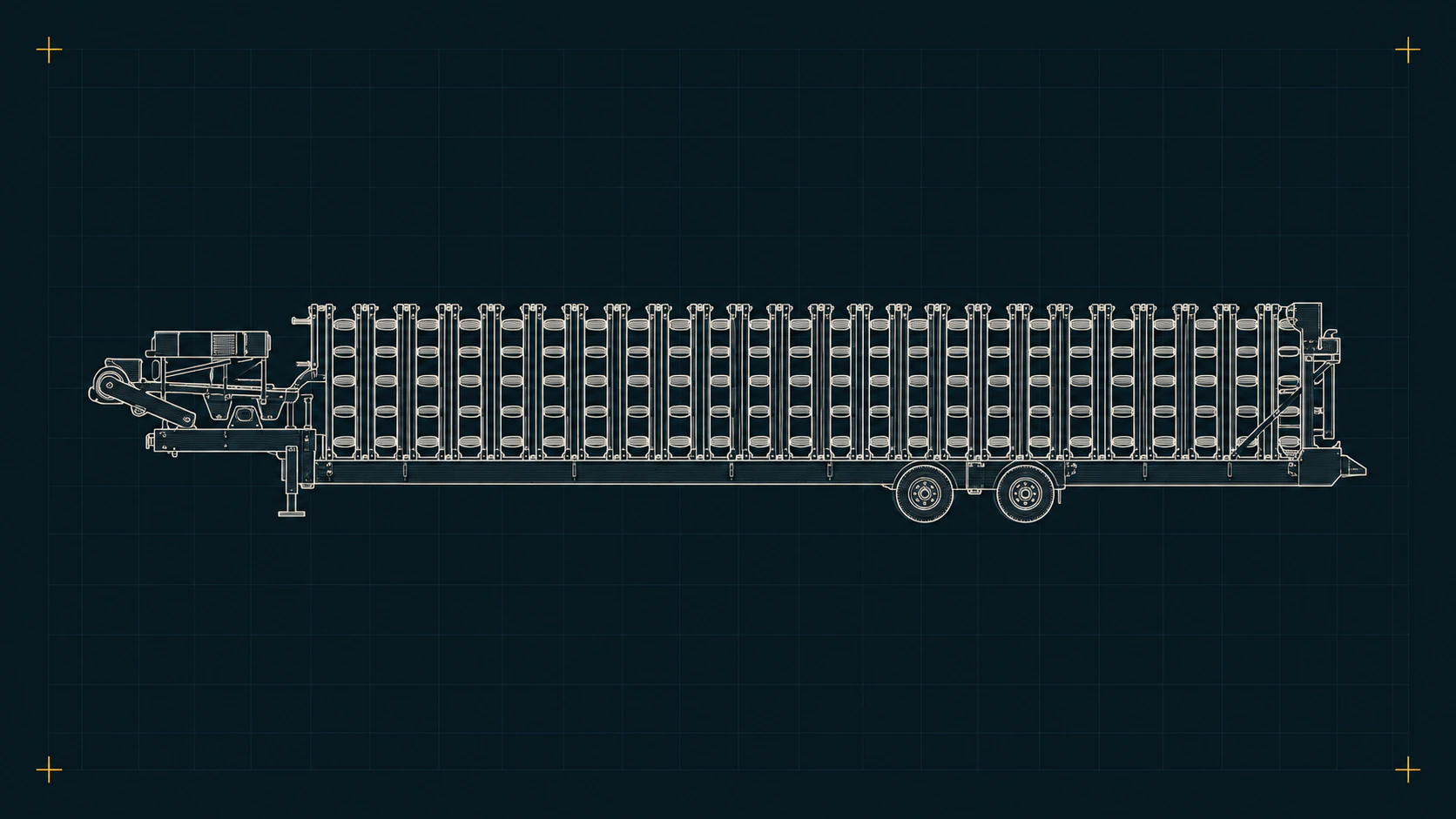
Compare the same configuration, including attachments, folded parts, counterweights and stabilizers. Transport dimensions can differ substantially from the working setup.
Before comparing used machines
Inspect belt or apron wear, rollers, head and tail sections, folding locks and structural joints. Separate transport length from deployed reach.
Manufacturer references
Product-family references for this guide; individual model measurements require their own documentation.



 Material Processing
 Material Processing