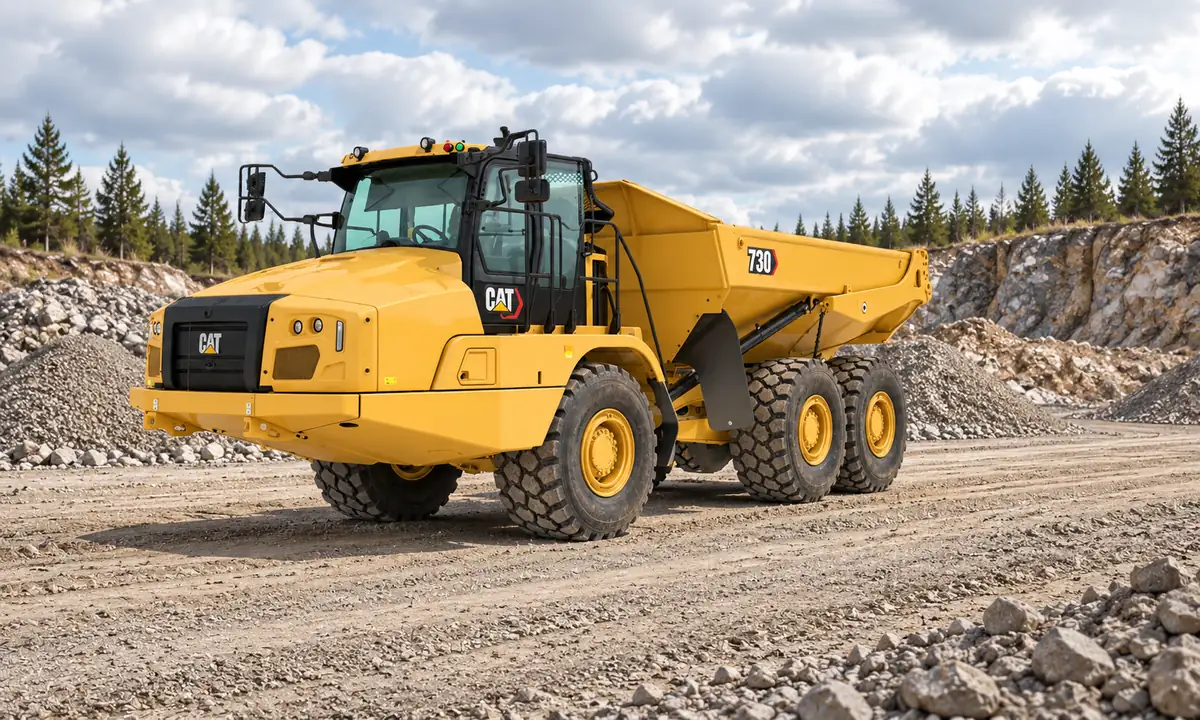
Match payload and body to the material
Identify the material and loading method, and obtain the manufacturer's payload and body-capacity basis. A heaped volume does not determine the weight of every material it can contain. Ask the loading-machine supplier to assess the pairing and the expected working arrangement. Keep rated payload separate from empty-machine weight and total transported weight.
Assess route and tipping space
Describe haul-road width, turns, surface and the loading and tipping areas. Provide the information to a competent site planner or operator for assessment. Record body-raised height separately from the lowered transport envelope. Do not treat the ability to enter a site as proof that the machine has suitable tipping clearance or ground conditions.
Inspect tires, articulation and body
Ask for a tire-by-tire condition record, size and matching assessment, along with articulation, suspension, braking and driveline inspection. Include body structure, liners, hinges and tipping cylinders. Inspect any tailgate and confirm whether it is part of the sale. A recent body repaint does not resolve the condition of the structure or the components that carry and discharge the load.
Budget the haul system
Include tire or liner work, initial service, transport and any required body or tailgate repairs. Consider the interaction with loading equipment and the cost of interrupted hauling. Compare candidates using the same intended duty and productive hours. Ask for current supplier quotations instead of applying a generic tire or repair allowance from an unrelated hauler.
Decision worksheet
| Decision | Evidence to collect | How it changes the shortlist |
|---|---|---|
| Load | Material, payload basis and body capacity | Matches the loader and material |
| Tipping | Raised-body clearance and site assessment | Checks a separate working envelope |
| Wear | Tire, body and articulation reports | Reveals major readiness costs |
Before you decide
Questions to close out
- Identify material and payload basis.
- Record lowered and raised configurations.
- Inspect all tires and articulation.
- Price liners, tailgate and transport separately.
The hauler is one part of a material-moving system. A candidate should fit the loading machine and route while carrying a documented condition and repair budget.
Continue your research
Sources and further reading
Technical references supporting this guide. Machine manuals and documentation for the actual configuration remain essential when applying the guidance.