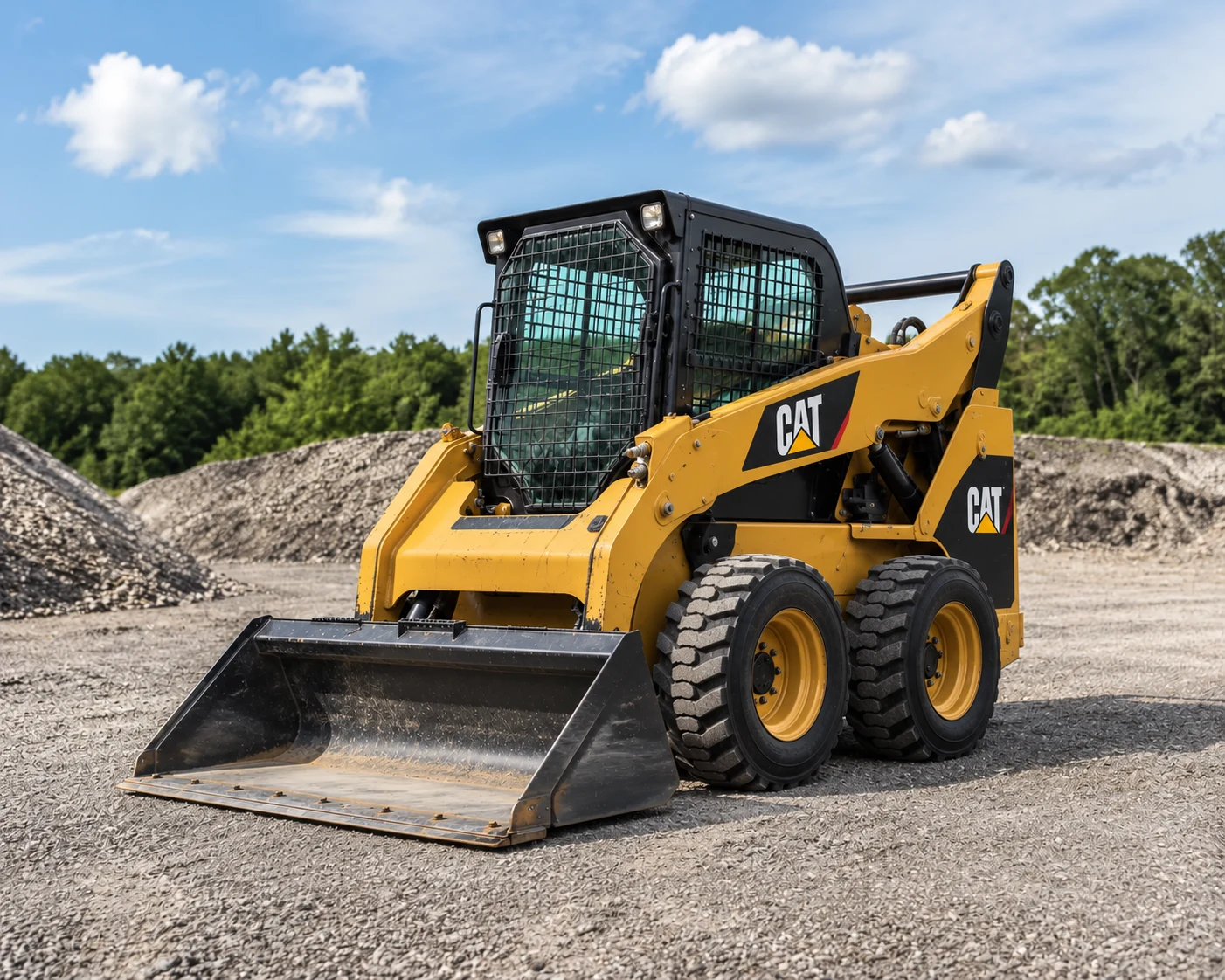
Identify the critical point in the cycle
Write down whether the task is ground-level grading, carrying, truck loading or placing material at height. Measure the receiving target and the approach. Bobcat distinguishes radial and vertical lift paths for different applications. Use that distinction to select what to investigate, then compare the actual geometry published for each shortlisted model.
Separate height, reach and clearance
Hinge-pin height refers to a point on the linkage. Dump clearance and reach describe other aspects of the tool position. They cannot be exchanged in a comparison table. Record the bucket or forks used for each value and the applicable dump angle or lift position. An attractive lift-height figure is not enough if the attachment cannot clear or reach the receiving edge.
Keep the capacity basis consistent
Compare rated operating capacity using the manufacturer's stated configuration and definition. A different bucket, counterweight or fork package can change the relevant assessment. Do not infer capacity from the shape of the lift path. Ask for the appropriate documentation when the intended task includes loads whose position or geometry differs from the reference arrangement.
Demonstrate the complete placement task
Arrange a safe, supplier-supported demonstration with the intended tool and an appropriate operator. Look at visibility, approach, clearance and the work sequence as well as the final height. Include attachment changes and site restrictions in the comparison. A lift system that works well in an open yard may still be awkward at a confined loading point.
Decision worksheet
| Decision | Evidence to collect | How it changes the shortlist |
|---|---|---|
| Task position | Ground work or specific placement target | Shows where geometry matters most |
| Reach and clearance | Same attachment and measurement definition | Prevents misleading height comparisons |
| Capacity | Matching rating and configuration | Keeps geometry separate from allowable load |
Before you decide
Questions to close out
- Measure the receiving edge and approach.
- Identify the tool used in each specification.
- Compare reach and clearance separately.
- Arrange a realistic placement demonstration.
Choose the lift arrangement using the point where the attachment must do useful work. Model-specific geometry and capacity information should confirm the choice.
Continue your research
Sources and further reading
Technical references supporting this guide. Machine manuals and documentation for the actual configuration remain essential when applying the guidance.