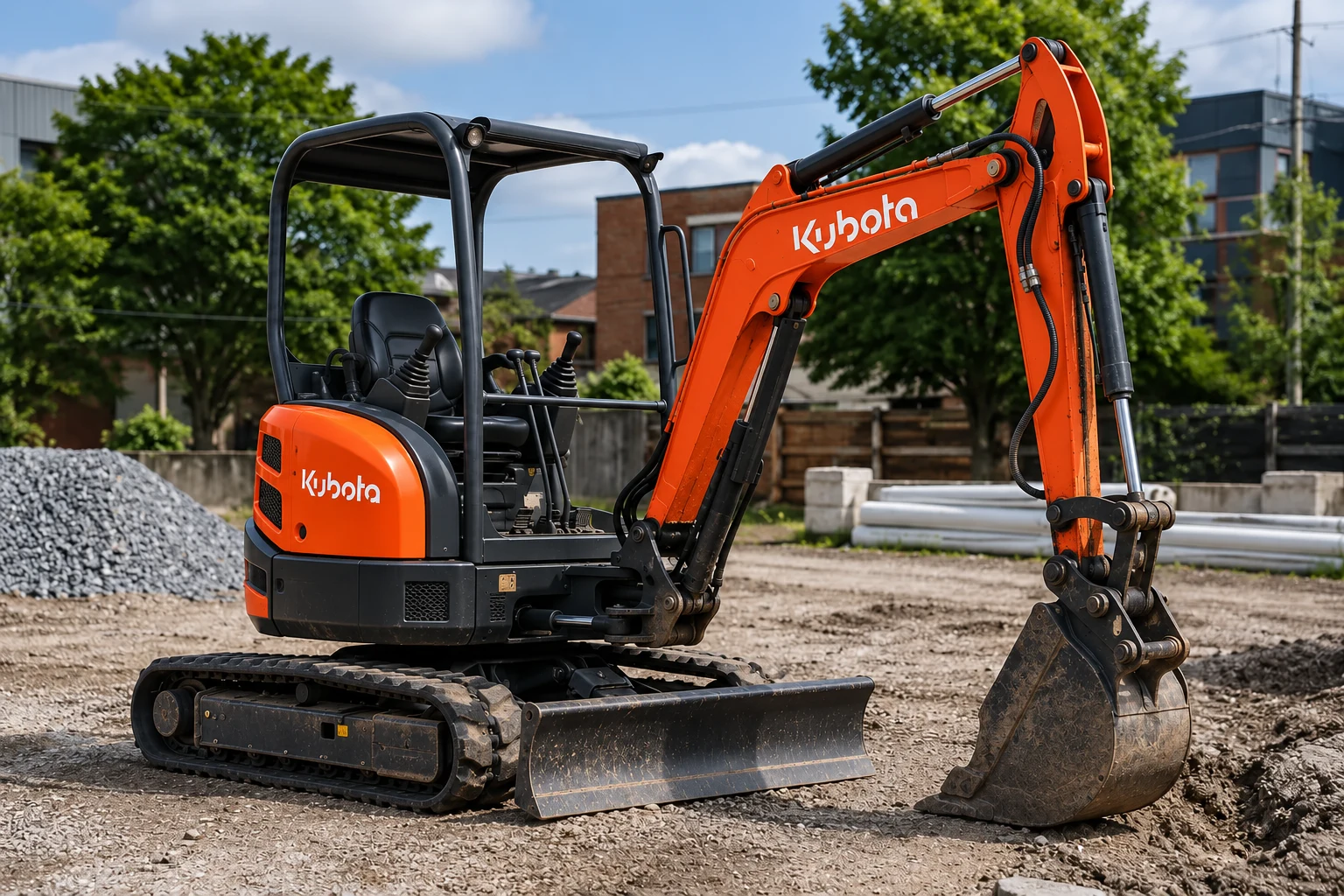
Establish method feasibility first
Collect alignment, depth, ground information, existing-utility information, crossing restrictions and product requirements from the project team. Qualified planning must establish whether either method is suitable. Do not select HDD only because it appears to avoid surface disturbance, or open cut only because an excavator is already available.
Inventory the different support systems
Open cut may need excavation, spoil removal, support, bedding, backfill and restoration equipment. HDD adds a rig/tooling package, locating, drilling-fluid supply and recovery arrangements appropriate to the project. Entry and exit areas still require access and preparation; the stowed drill footprint is not the entire setup.
Match tools to the ground and route
The JT20 and AT32 illustrate conventional versus dual-rod HDD choices. Rod bend radius, product requirements and tooling matter alongside thrust and pullback. A TR455 chain-trencher reference describes another method and attachment; no carrier rating alone establishes a feasible installation.
Compare the complete scope
Build two scenarios with the same finished utility outcome, including mobilization, supporting plant, restoration and documented uncertainties. Obtain method-specific supplier estimates and inspection of rods, tooling or trenching wear parts. Keep unknown ground or configuration information visible rather than hiding it inside a single assumed unit cost.
Decision worksheet
| Requirement | Evidence to collect | Effect on equipment choice |
|---|---|---|
| Route and ground | Project investigation and utility information | Determine supported methods before equipment selection |
| Worksite footprint | Entry/exit or excavation and spoil layout | Include all support plant and access |
| Finished outcome | Installation and restoration scope | Compare equivalent deliverables and uncertainties |
Before you decide
Questions to close out
- Confirm qualified method planning.
- List locating, fluid or spoil systems.
- Identify tooling and exact carrier configuration.
- Compare restoration and mobilization in both scenarios.
A method comparison is meaningful only when both equipment packages deliver the same finished installation with their support needs included.
Continue your research
Sources and further reading
Technical references supporting this guide. Machine manuals and documentation for the actual configuration remain essential when applying the guidance.